
The Real AFK Pass Rate: What the Numbers Tell Us
Let's start with the facts.
National AFK Pass Rates (2022-2024):
First-time takers: 64-68%
Second-time takers: 72-75%
Third-time takers: 55-60% (often lower due to burnout)
Pass Rates by Study Approach:
Self-study only: ~58%
With course: ~78%
With structured program + accountability: ~89%
What This Means for You:
The gap between 58% and 89% isn't about intelligence — it's about strategy. The dentists who pass on their first try aren't necessarily smarter. They're simply following a proven system.
Success Factor #1: They Started with a Realistic Timeline (Not False Hope)
The Biggest Mistake: Underestimating preparation time.
We surveyed dentists who failed their first AFK attempt. 73% said they "thought they were ready" but had only studied for 4-8 weeks.
What Successful Students Did Differently:
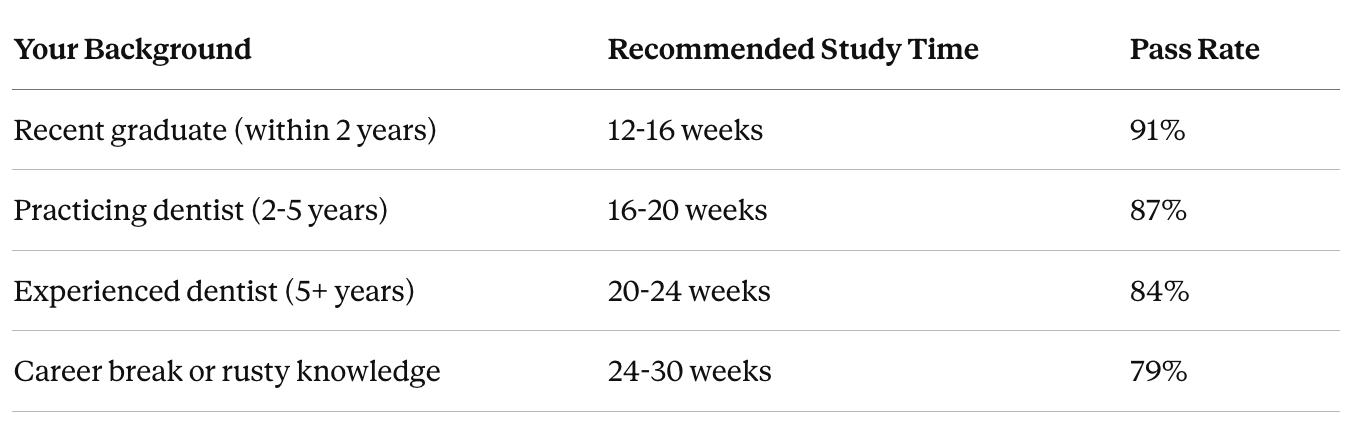
The dentists who passed committed to these minimum timelines based on their background:
Success Factor #2: They Studied Smarter, Not Just Harder
The Second Biggest Mistake:
Treating all topics equally.
Treating all topics equally.
The AFK exam isn't evenly weighted. Certain subjects appear far more frequently than others.
What Successful Students Did Differently:
They followed the 80/20 Rule — focusing 80% of their study time on the 20% of topics that make up 80% of the exam.
Success Factor #3: They Practiced with REAL Exam-Grade Questions
The Third Mistake: Relying on outdated or low-quality practice questions.
Here's what many dentists don't realize: The NDEB updates its question bank every year. Questions from 2018 prep books may test concepts that are no longer emphasized.
What Successful Students Did Differently:
They practiced with questions that mirror the current exam format, difficulty level, and content distribution.
Claim Your Free Readiness Assessment
Get the feel of the high yield notes:
-
Notes coming from textbooks covering the most important topics for AFK, you need nothing more than them to pass AFK. You don't need to waste your time getting the important information from the textbooks, I did that for you.
Write your awesome label here.
Never miss the news
Stay updated | Stay current | Stay connected
Thank you!
Success Factor #4: They Got Personalized Feedback (Not Generic Advice)
The Fourth Mistake: Studying in isolation without knowing what you're getting wrong.
Most dentists study by reading textbooks, watching videos, then taking practice tests. When they get questions wrong, they review the topic and move on.
What Successful Students Did Differently:
They analyzed their pattern of mistakes to create a custom study plan.
The Power of Pattern Recognition:
Let's say you got 10 pharmacology questions wrong. But here's the nuance:
- 7 were about drug interactions
- 7 were about drug interactions
- 2 were about dosing
- 1 was about contraindications
How Our Top Students Do This:
1- Take a diagnostic quiz (identifies baseline)
2- Review wrong answers with detailed explanations
3- Get bi-weekly one-on-one sessions to discuss patterns
4- Receive custom study plan adjusting for weak areas
5- Retake similar questions to confirm improvement
Free Resources to Support Your Preparation 🎥📚🆓
Success Factor #5: They Treated It Like a Marathon, Not a Sprint
The Fifth Mistake: Burnout and inconsistent studying.
Failed student pattern:
Study 6 hours daily for 2 weeks → burnout → study sporadically → panic study 3 days before exam → fail
Study 6 hours daily for 2 weeks → burnout → study sporadically → panic study 3 days before exam → fail
Successful student pattern:
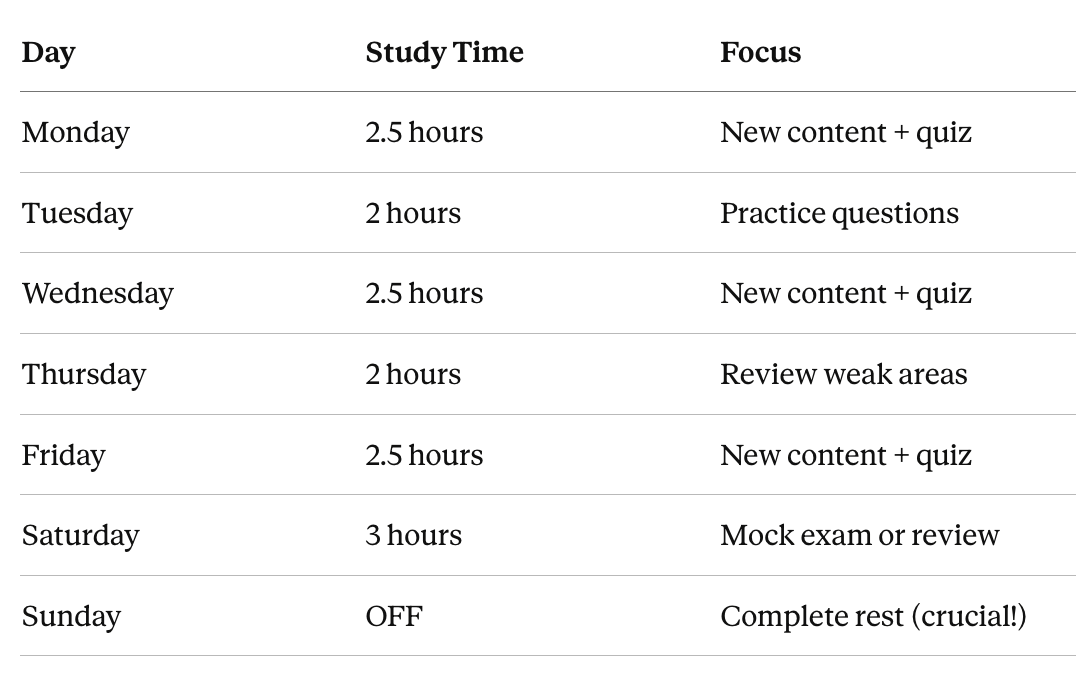
Study 2-3 hours daily consistently for 16 weeks → steady progress → pass
Study 2-3 hours daily consistently for 16 weeks → steady progress → pass
What Successful Students Did Differently:
They built sustainable study habits with built-in recovery time.
The One Thing All 342 Successful Students Had in Common
After reviewing every success story, one pattern emerged above all others:
"They didn't study alone"
Whether through:
- Live discussion sessions
- Study groups
- One-on-one mentorship
- Community forums
The dentists who passed had accountability and support.
Here's why this matters:
Studying Solo:
No one to ask when confused
Can't gauge if you're on track
Easy to procrastinate or give up
Difficult to maintain motivation for 16+ weeks
Studying with Support:
How Our Top Students Do This:
1- Take a diagnostic quiz (identifies baseline)
2- Review wrong answers with detailed explanations
3- Get bi-weekly one-on-one sessions to discuss patterns
4- Receive custom study plan adjusting for weak areas
5- Retake similar questions to confirm improvement
Final Thoughts:
Your Success is Predictable
Passing the AFK exam isn't about luck. It's not about being the smartest dentist in the room.
It's about following a proven system:
✅ Realistic timeline
✅ High-yield focus
✅ Exam-grade practice questions
✅ Personalized feedback
✅ Sustainable study habits
✅ Community support
The 342 dentists who passed our program weren't special. They simply had a roadmap.
Now you have the same roadmap.
The only question left is:
Will you follow it?
Will you follow it?
About the Author:
Dr. Mohamed is a licensed dentist in Canada who successfully passed both AFK and ACJ exams. After seeing too many talented international dentists fail due to poor study strategies, he created AFKStudyPlan to provide structured, evidence-based preparation. He's helped 342+ dentists pass their NDEB equivalency exams.
Have questions?
Email us at Info@afkstudyplan.com
or call 587-707-7068.
Email us at Info@afkstudyplan.com
or call 587-707-7068.
Copyright © 2025