The Local Anesthesia Calculation Formula That AFK Candidates Wish They Knew Sooner

Mar 5 / Mohamed Moussa
If there's one topic that makes AFK exam candidates nervous, it's local anesthesia dose calculations. The good news? Once you understand the logic behind the numbers, it becomes a lot more manageable. This blog breaks it all down — the principles, the conversions, and the clinical shortcuts that will save you on exam day.

Maximum Recommended Dose (MRD) questions appear regularly on the AFK. They test your ability to apply pharmacological knowledge in a clinical scenario — and a small unit conversion mistake can completely change your answer. That's why getting comfortable with the underlying principles matters more than memorizing tables alone.


The 3 Variables You Always Need

Every local anesthesia calculation starts with three pieces of information:

Maximum dose (mg/kg) 

based on the drug being used

Patient medical history 

determines which drug and vasoconstrictor are appropriate

Patient weight (kg)

used when the patient is under 66 kg or a child
These three variables together determine the maximum recommended volume of local anesthetic you can safely administer.

Step 1: Converting Concentrations

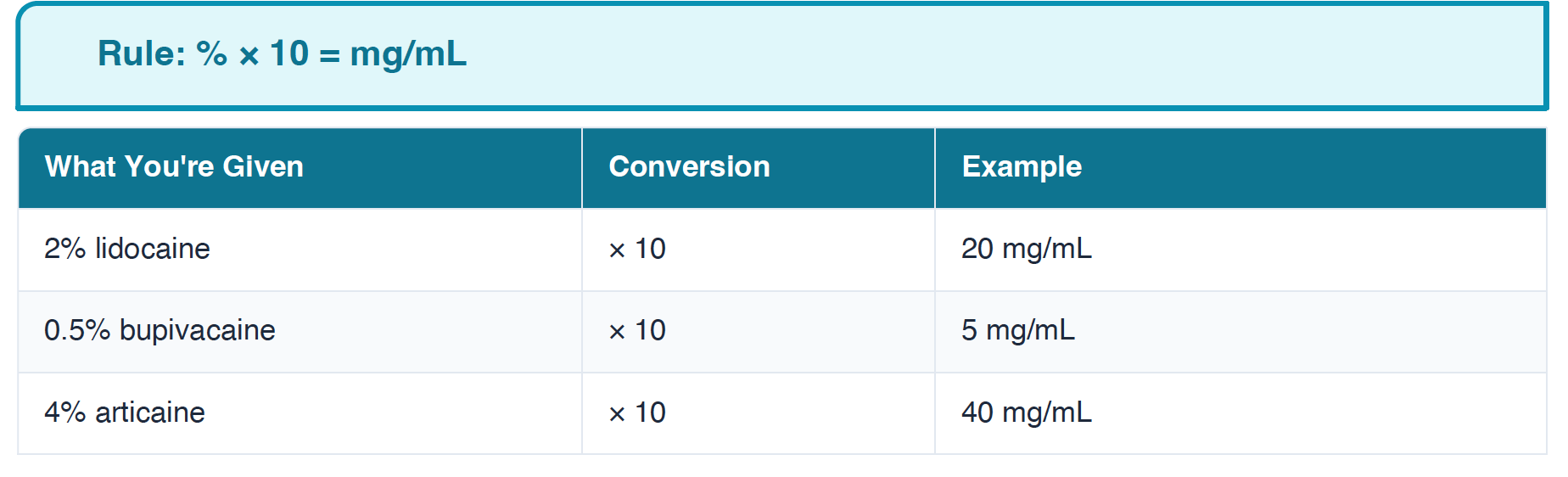
This is where most mistakes happen — units. You need to be able to move between percentages, mg/mL, and ratios fluently.
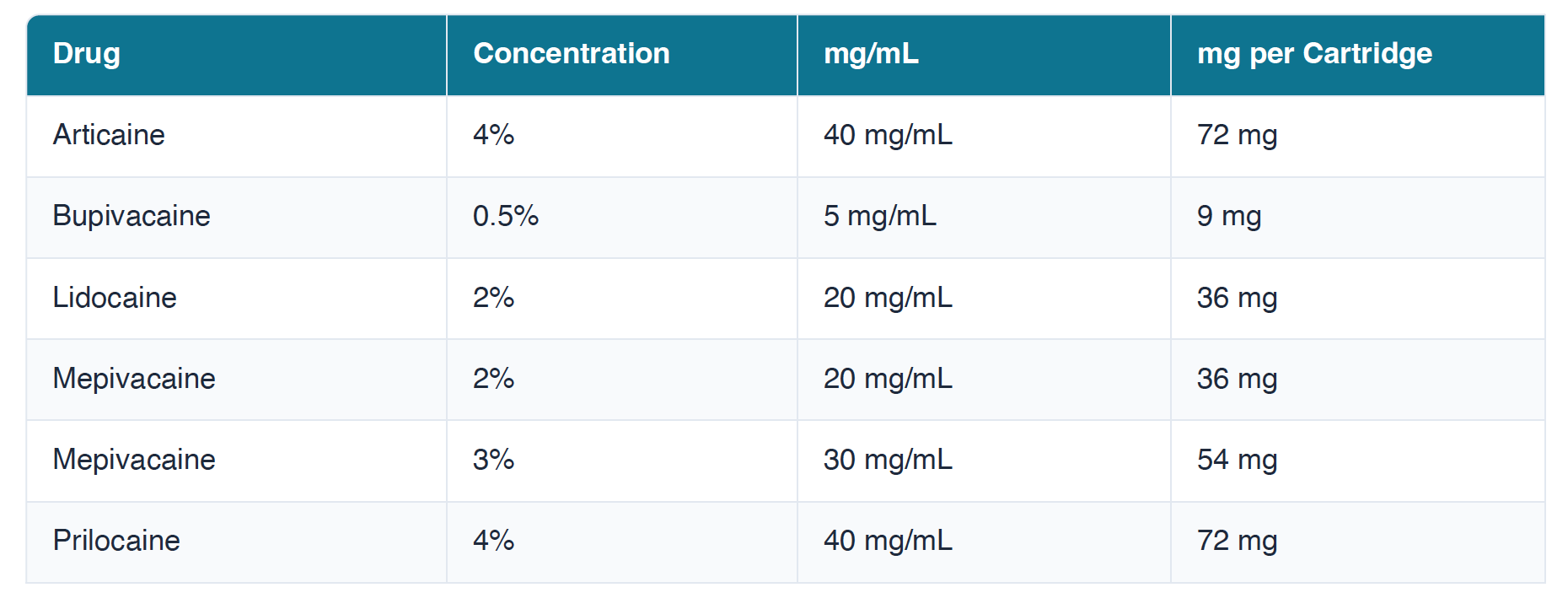
Local Anesthetic Concentration
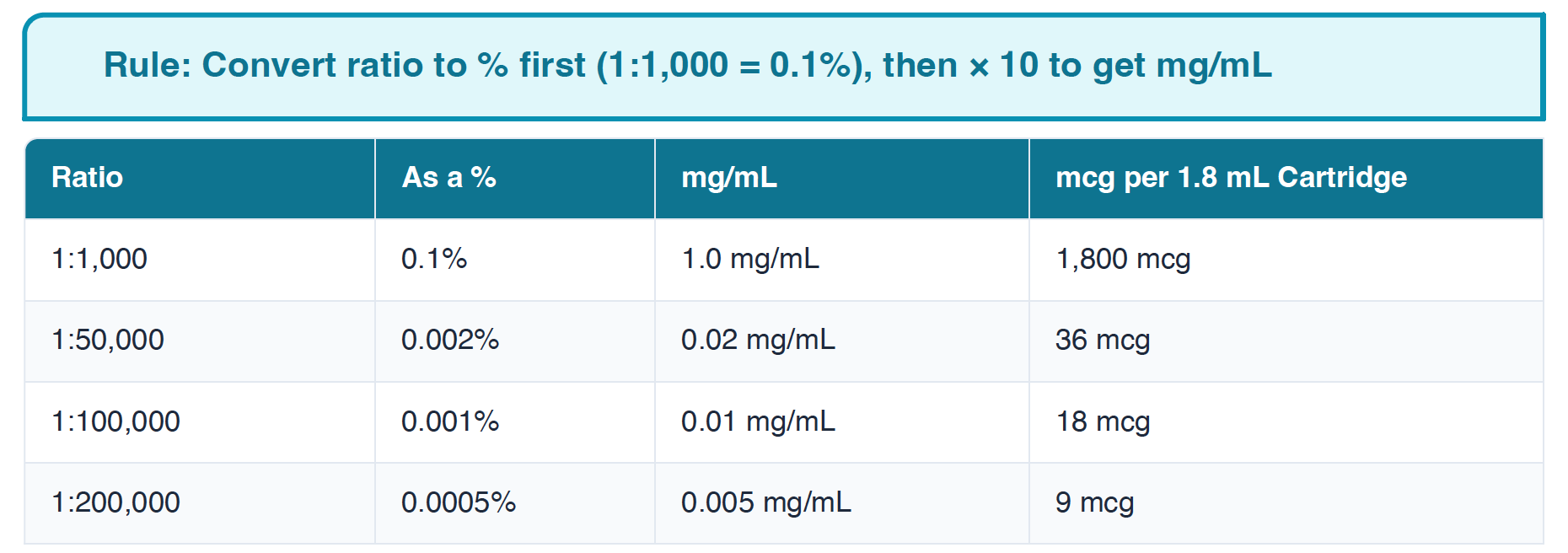
Epinephrine (Vasoconstrictor) Concentration
Epinephrine concentrations are written as ratios. Convert in 2 steps: ratio to % to mg/mL.

Free Resources to Support Your Preparation 🎥📚🆓

We believe that every candidate should have access to high-quality learning materials, which is why we offer free resources to support your preparation for the AFK exam! 🌟🎯📖

Interactive Videos: Our expertly crafted videos explain key topics in an engaging, easy-to-understand format, helping you grasp essential concepts more effectively.

Question Bank with Detailed Answers: Practice with real exam-style questions and receive comprehensive explanations to strengthen your understanding and improve your problem-solving skills.

One-on-One Consultation: Need a study plan tailored to your unique needs? We offer personalized 1-on-1 sessions, where we assess your situation and learning preferences to recommend the best study strategies for your success. 🤝📈📅

These resources are designed to empower you with the knowledge and confidence needed to excel in the equivalency process. Take advantage of them and set yourself up for success! 🚀📚💡

Step 2: Maximum Recommended Doses (MRDs)
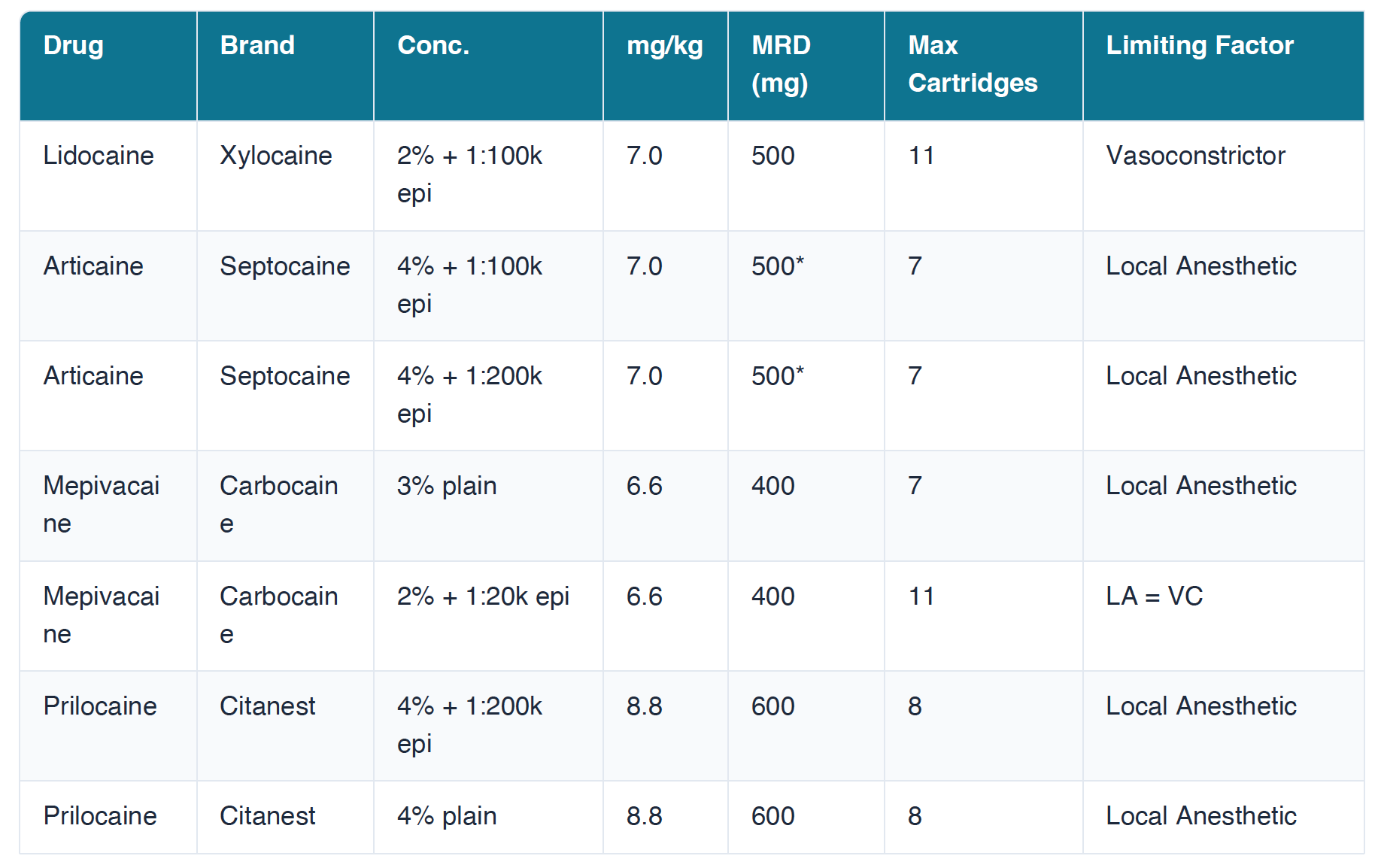
For healthy adults weighing approximately 150 lb (68 kg):

Step 3: Check Medical History First

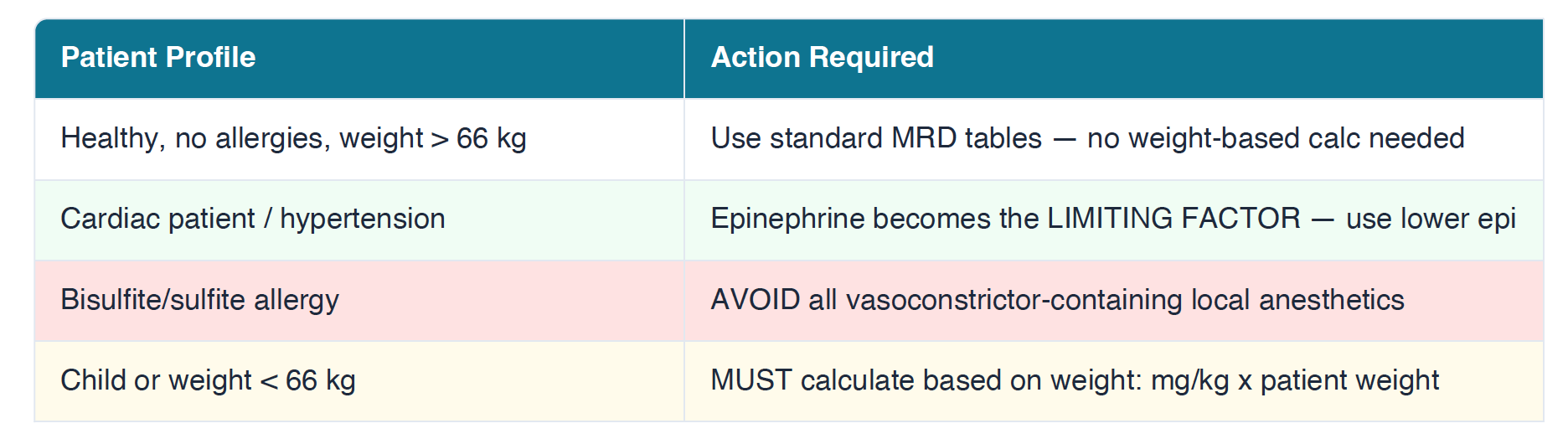
Before you calculate anything, medical history determines which drug is even appropriate. Here's the decision framework:
Patient Scenario Decision Tree

Step 4: Epinephrine Limits for Cardiac Patients
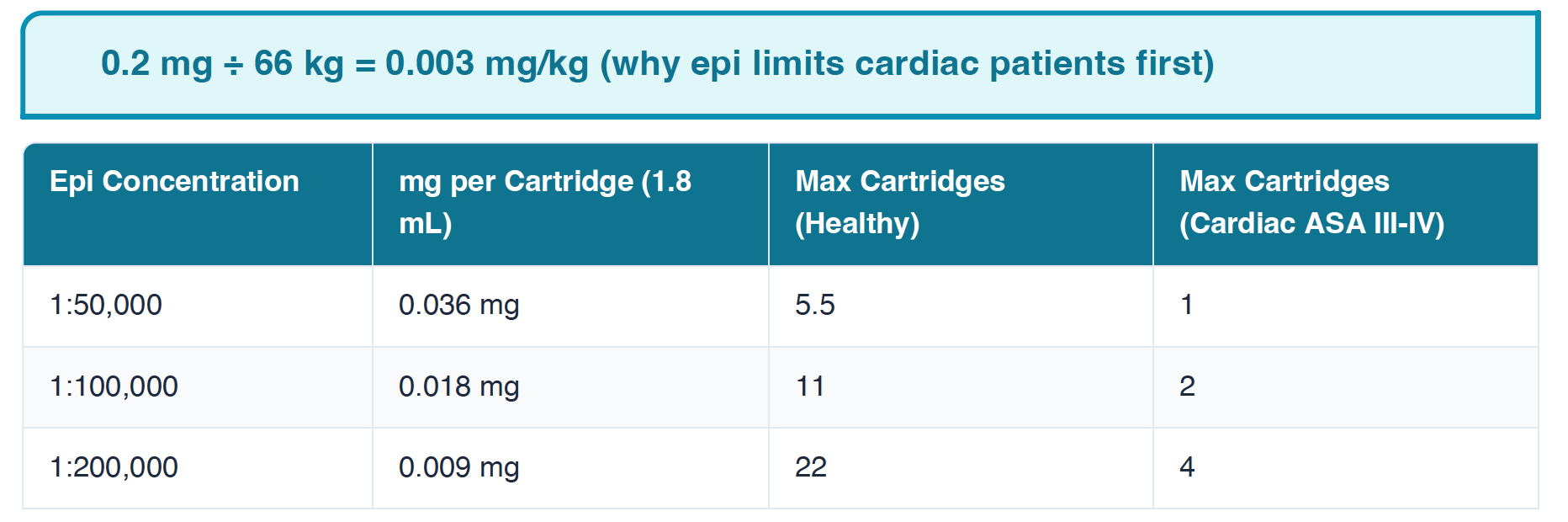
For a healthy adult, the maximum recommended epinephrine dose per dental appointment is 0.2 mg.
This is why the vasoconstrictor, not the local anesthetic, becomes the limiting factor in cardiac patients.
Maximum Cartridges by Epinephrine Concentration
Would you like to download this guide? Sure

Download our attachment!

Quick Reference:
mg per Cartridge (1.8 mL)
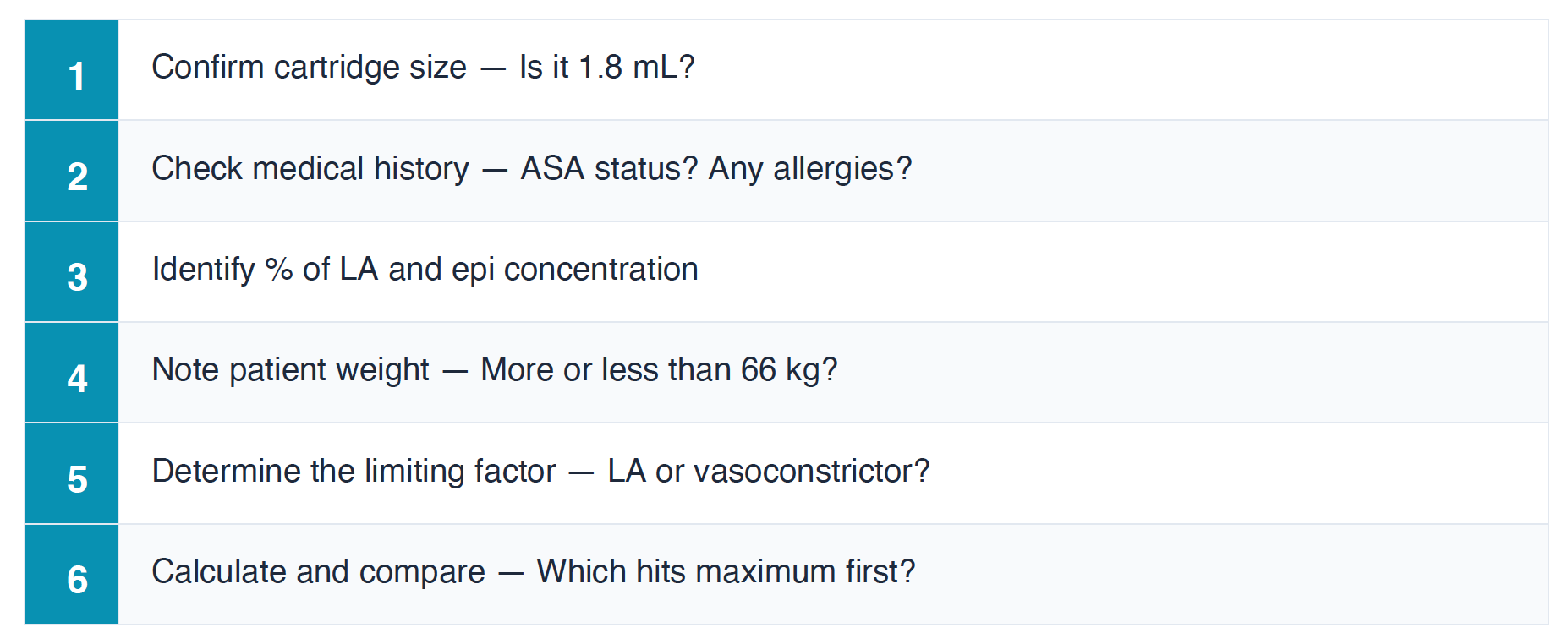
Exam Day Checklist
When you see a local anesthesia calculation question on the AFK, run through this:
Write your awesome label here.

Would you like to study smart not hard? 
Join the full course today

Unique learning paths
  • By engaging with our interactive platform, you will not only enhance your knowledge but also develop the resilience to handle any stress that comes your way
  • Not only that, but we also offer authentic exam-grade questions that are backed by evidence-based, fully explained answers.
  • Additionally, we offer MOCK exams to ensure that you are fully prepared for the real AFK exam. Join us now and unlock your true potential!

Never miss the news

Stay updated | Stay current | Stay connected

Thank you!

Claim Your Free Readiness Assessment

Get the feel of the high yield notes:

  • Notes coming from textbooks covering the most important topics for AFK, you need nothing more than them to pass AFK. You don't need to waste your time getting the important information from the textbooks, I did that for you.
Write your awesome label here.

About the Author:

Dr. Mohamed is a licensed dentist in Canada who successfully passed both AFK and ACJ exams. After seeing too many talented international dentists fail due to poor study strategies, he created AFKStudyPlan to provide structured, evidence-based preparation. He's helped 342+ dentists pass their NDEB equivalency exams.
Have questions?
Email us at Info@afkstudyplan.com
or call 587-707-7068.

Frequently Asked Questions 

Q: What's the most common mistake candidates make in LA calculation questions?

Not converting units before calculating. The exam gives you a percentage concentration, but the MRD is in mg/kg — if you don't convert % to mg/mL first, your entire answer will be wrong. Always do your unit conversions before anything else.

Q: If a patient has cardiovascular disease, do I still use the same MRD table?

Not exactly. For cardiac patients (ASA III–IV), epinephrine becomes the limiting factor — not the local anesthetic. You cap epinephrine at 0.04 mg per appointment (vs 0.2 mg for healthy patients), which drastically reduces the number of cartridges allowed. Always check which factor — the LA or the vasoconstrictor — runs out first.

Q: What if the patient is allergic to bisulfites?

Avoid all vasoconstrictor-containing local anesthetics entirely — this is an absolute contraindication. Choose a plain local anesthetic with no epinephrine, such as Mepivacaine 3% or Prilocaine 4% plain.

Q: How do I know whether the LA or the vasoconstrictor is the limiting factor?

Calculate both separately, then see which one you hit first. Whichever gives you the lower maximum number of cartridges — that's your limiting factor and your answer.

Q: When do I need to calculate based on weight vs. just using the table?

Use the table for healthy adults weighing more than 66 kg. If the patient is a child, or an adult weighing less than 66 kg, you must calculate manually: MRD (mg) = mg/kg × patient weight.