Feb 19 • AFK study plan

Drug-Drug Interactions for AFK Exam: 4-Step Essential Guide

Why This Matters for the AFK Exam

Drug-drug interactions are critical-mastery level content for the AFK exam. Understanding which medications interact—and how to manage them safely—is essential for dental practice in Canada.

Enzyme Inducers vs. Inhibitors: What Every Dentist Needs to Know
Think of your liver as a giant drug-processing factory. Inside this factory are specialized workers called cytochrome P450 (CYP) enzymes that break down about 75% of all medications your patients take. Now, some drugs don't just get metabolized—they actually change how fast the factory operates. That's where enzyme inducers and inhibitors come in.

Enzyme Inducers: Speeding Up the Factory

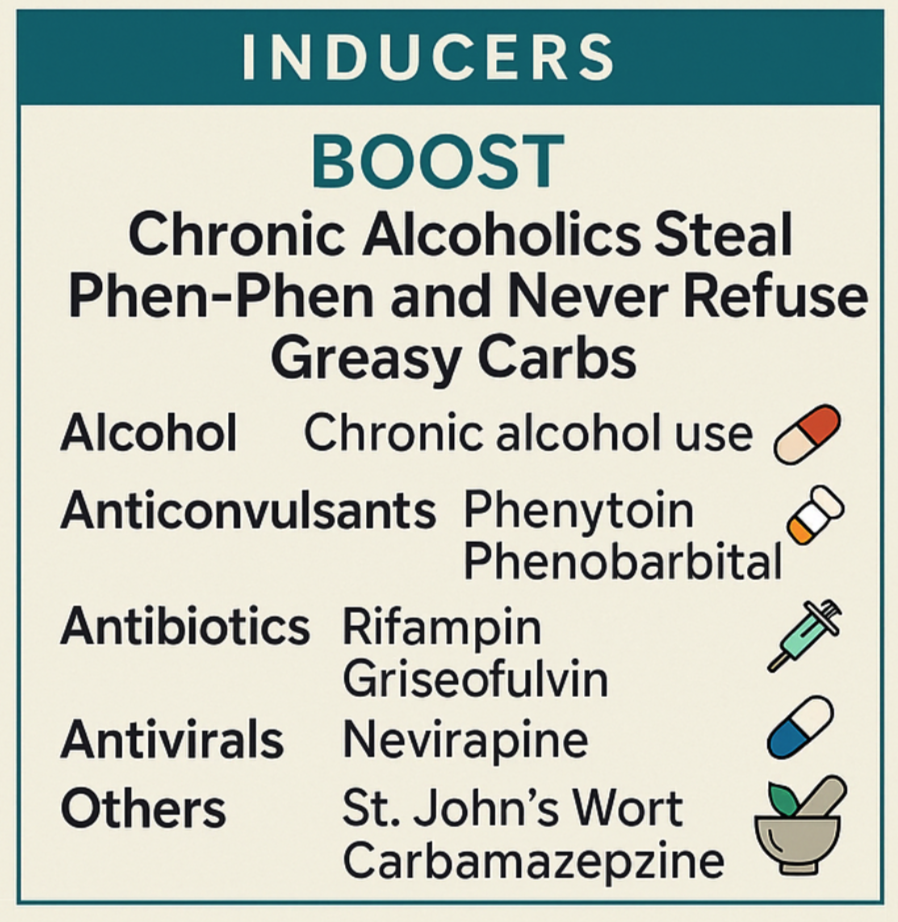
Enzyme inducers are like adding more workers to the assembly line. Drugs like rifampin, carbamazepine, and phenytoin actually tell the liver's DNA to produce more CYP enzymes. This process takes days to weeks to kick in, but once it does, the liver starts breaking down drugs much faster than normal.
🔷 What this means clinically: 
If your patient is on an enzyme inducer, other medications get metabolized so quickly that their blood levels drop. The drugs don't stick around long enough to work properly. Result? Treatment failure. You might need to prescribe higher doses to achieve the same therapeutic effect.
🔹 Real-world example: 
A patient on phenytoin (seizure medication) needs warfarin (blood thinner). The phenytoin speeds up warfarin metabolism, so the warfarin gets cleared too fast and doesn't prevent clots effectively. The dose needs to be increased.

Enzyme Inhibitors: Jamming the Factory

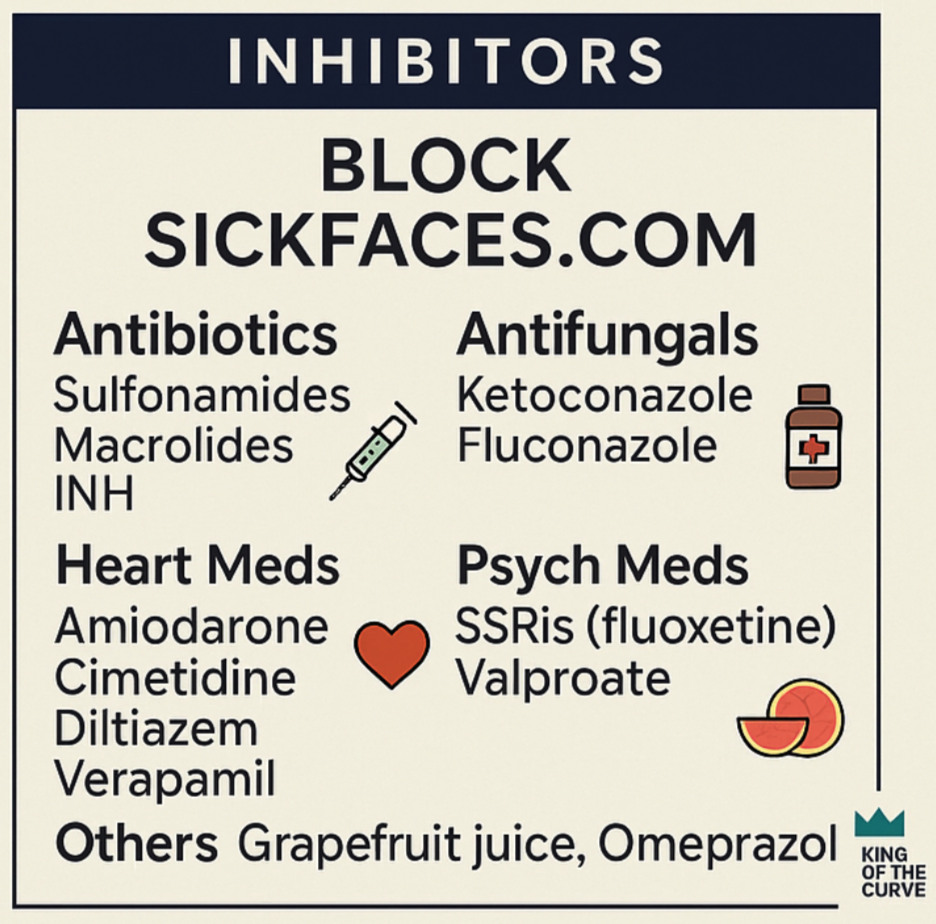
Enzyme inhibitors do the opposite—they're like blocking the assembly line. Drugs like ketoconazole, erythromycin, and grapefruit juice physically occupy the active sites of CYP enzymes, preventing them from metabolizing other drugs. Unlike inducers, this effect happens fast—within hours.
🔷 What this means clinically: 
If your patient is on an enzyme inhibitor, other medications can't get broken down efficiently. Drug levels build up in the bloodstream, reaching potentially toxic concentrations. Result? Overdose symptoms and serious adverse effects, even at normal doses.
🔹 Real-world example: 
A patient taking a statin (cholesterol drug) gets prescribed erythromycin for a dental infection. The erythromycin blocks statin metabolism, causing statin levels to skyrocket. This can lead to rhabdomyolysis—severe muscle breakdown that can cause kidney failure.
Write your awesome label here.

Would you like to study smart not hard? 
Join the full course today

Unique learning paths
  • By engaging with our interactive platform, you will not only enhance your knowledge but also develop the resilience to handle any stress that comes your way
  • Not only that, but we also offer authentic exam-grade questions that are backed by evidence-based, fully explained answers.
  • Additionally, we offer MOCK exams to ensure that you are fully prepared for the real AFK exam. Join us now and unlock your true potential!

💊 The Bottom Line

The key difference:
Inducers = More enzymes = Faster breakdown = Lower drug levels = Risk of treatment failure
Inhibitors = Blocked enzymes = Slower breakdown = Higher drug levels = Risk of toxicity

How to Study This for the AFK Exam

🔹 Step 1: Memorize the Two Mnemonics 
  • CRAP GPS = Enzyme inducers
  • SICK FACES.COM = Enzyme inhibitors

🔹 Step 2: Focus on High-Yield Tables
  • Antibiotics + Warfarin
  • NSAIDs + Antihypertensives
  • Epinephrine + Beta-blockers/TCAs/Cocaine
  • Renal dose adjustments
Step 3: Practice Clinical Scenarios
  1. "Patient on warfarin needs extraction" → Which antibiotic?
    (Answer: Penicillins/tetracyclines/clindamycin cautiously; monitor INR)
  2. "Patient on propranolol needs local anesthetic" → Max epi dose?
    (Answer: 0.036 mg = half cartridge initially, up to 2 cartridges)
  3. "Patient with kidney disease GFR <30" → Which analgesic?
    (Answer: Acetaminophen; avoid NSAIDs, adjust antibiotic doses)
Step 4: Recognize the Pattern
AFK questions test:
1. Which drug to AVOID?
2. Which drug to USE instead?
3. What dose adjustment needed?
4. What monitoring required?

Quick Reference: Most Dangerous Interactions

Write your awesome label here.
🔺 AFK trap
Vitamin K does NOT reverse DOACs
🔹 Dental mindset
Minor dental procedures usually do not require stopping DOACs
🔺 Remember:
The AFK exam expects you to recognize interactions, know alternatives, and manage safely. Focus on the most common clinical scenarios, memorize the mnemonics, and you'll be ready.


Good luck!

Are you looking for detailed tables for
drug drug interaction?
Write you email to get a high-yield PDF

Thank you!

Free Resources to Support Your Preparation 🎥📚🆓

We believe that every candidate should have access to high-quality learning materials, which is why we offer free resources to support your preparation for the AFK exam! 🌟🎯📖

Interactive Videos: Our expertly crafted videos explain key topics in an engaging, easy-to-understand format, helping you grasp essential concepts more effectively.

Question Bank with Detailed Answers: Practice with real exam-style questions and receive comprehensive explanations to strengthen your understanding and improve your problem-solving skills.

One-on-One Consultation: Need a study plan tailored to your unique needs? We offer personalized 1-on-1 sessions, where we assess your situation and learning preferences to recommend the best study strategies for your success. 🤝📈📅

These resources are designed to empower you with the knowledge and confidence needed to excel in the equivalency process. Take advantage of them and set yourself up for success! 🚀📚💡

About the Author:

Dr. Mohamed is a licensed dentist in Canada who successfully passed both AFK and ACJ exams. After seeing too many talented international dentists fail due to poor study strategies, he created AFKStudyPlan to provide structured, evidence-based preparation. He's helped 342+ dentists pass their NDEB equivalency exams.
Have questions?
Email us at Info@afkstudyplan.com
or call 587-707-7068.

Latest from our blog