Sep 13 • AFK study plan

5 High-Yield Epidemiology, Ethics & Infection Control Concepts You Cannot Afford to Miss

Preparing for dental board licensing examinations—such as the AFK can feel overwhelming. Candidates often spend tens of hours mastering complex restorative procedures and oral pathology, only to lose crucial points on epidemiology, healthcare ethics, biostatistics, and sterilization protocols. Exam writers intentionally design these questions with tricky clinical scenarios and subtle distractor choices. Understanding the core principles and subtle distinctions behind these topics is the secret to converting "gray zone" questions into guaranteed marks. This high-yield guide breaks down five essential exam concepts, complete with clinical traps, comparison matrices, and key memory anchors

🎁 Your FREE AFK High-Yield Guide Is Ready!

Get instant access to a high-yield AFK PDF packed with important concepts, key facts, and exam-focused information you need to know.
📘 Study smart. Focus on what matters. Build your confidence.
Good luck with your AFK journey! 🦷💙
Enter your email to get your FREE PDF instantly.
Write your awesome label here.

1. The 4+1 Core Healthcare Ethics Principles & Critical Reporting Traps
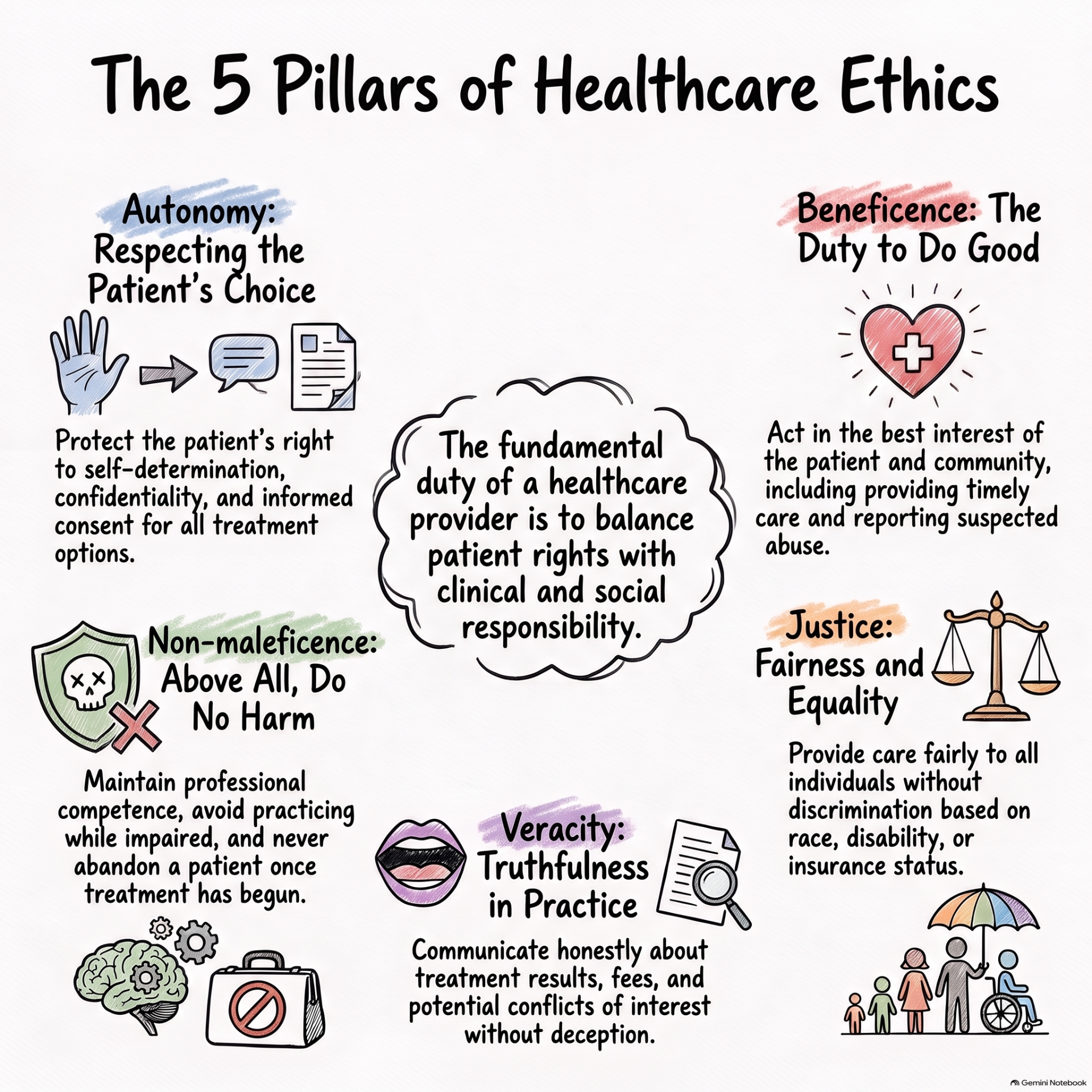
Healthcare ethics questions are built around four foundational principles—Autonomy, Beneficence, Non-Maleficence, and Justice—along with a fifth closely linked principle, Veracity

Autonomy: 

Respects a patient’s right to self-determination, confidentiality, and self-governance. Dentists are mandated to inform patients of all indicated treatment options, including the option of doing nothing. Patient records and X-rays belong to the patient’s record history and must be transferred to a new dentist upon request (at cost or free), even if the patient has an outstanding unpaid financial balance.

Beneficence:

The obligation to "do good" and act for the benefit of the patient and community. This includes providing timely, competent care, considering patient needs, performing community service, and offering continuous education transparency.

Non-Maleficence: 

The duty to "do no harm". Key obligations include keeping skills current through continuing education (CE), seeking specialist consultations when a case exceeds expertise (e.g., referring a complex C-shaped root canal), supervising auxiliaries, practicing sober, and avoiding patient abandonment

Justice: 

Fairness and equal treatment for all patients without prejudice regarding race, gender, disability, or insurance status. Emergency care must be provided to patients and non-patients alike. Justice also mandates reporting faulty treatment by another dentist to a reviewing agency without making disparaging subjective comments directly to the patient.

Veracity:

 Truthfulness and avoiding deception. Unethical behaviors under veracity include overbilling, altering treatment dates for insurance claims, promising unrealistic treatment outcomes, or recommending the removal of sound amalgam restorations. Both Veracity and Justice can be used interchangeably. 

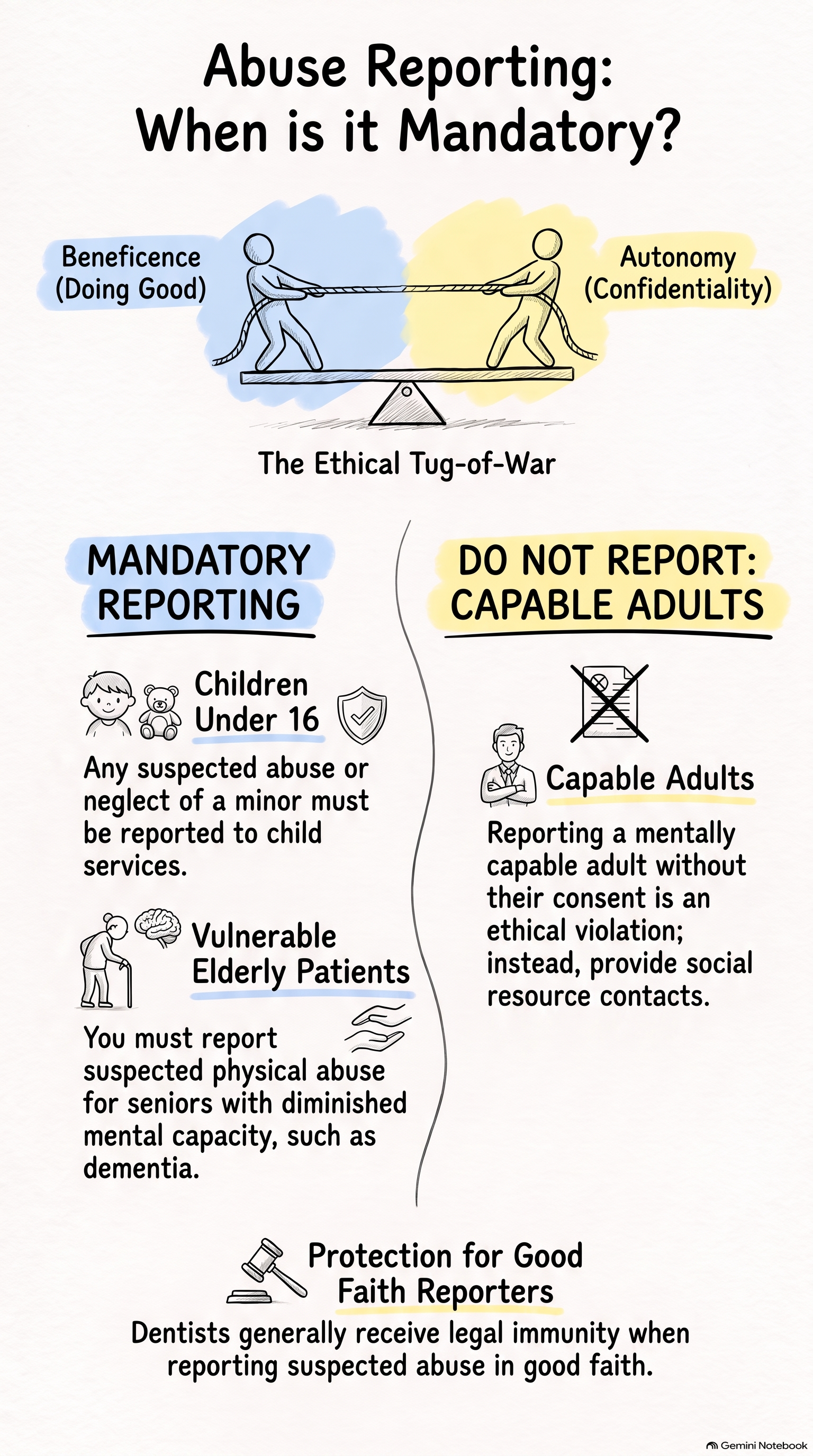
EXAM TRAP: Mandatory Reporting:

1. Mandatory Abuse Reporting: Suspected abuse/neglect in a minor (<16 yrs) or an elder with diminished mental capacity MUST be reported to child/social protection agencies. Reporting is mandatory by law.
2. Spousal / Competent Adult Abuse:
If a competent adult reveals domestic abuse, Offer supportive resources/hotlines.
3. Impaired Colleagues:
If a colleague arrives intoxicated or chemically impaired, you are mandated under Non-Maleficence to report them to a professional assistance committee.
2. Infection Control & Sterilization Protocols
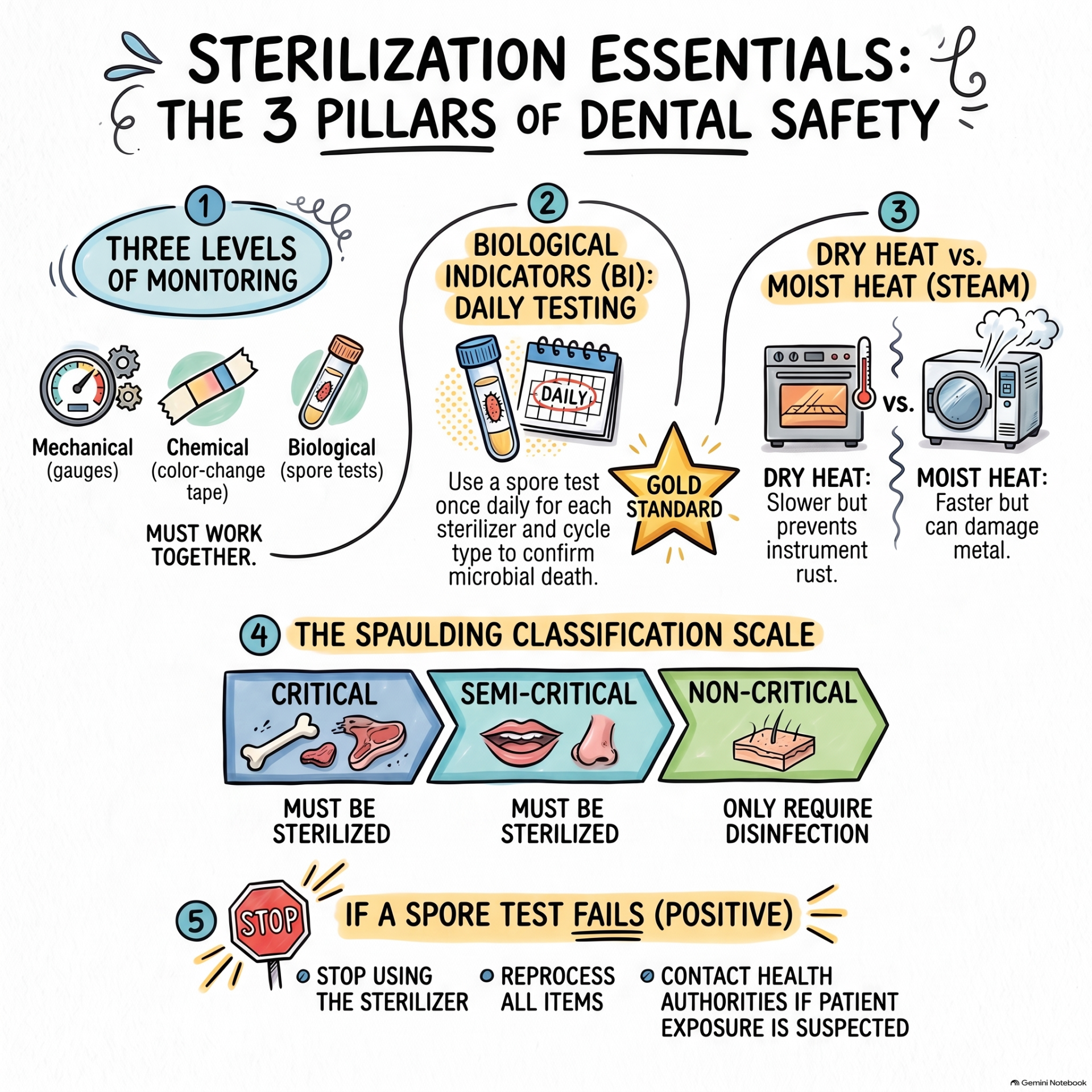
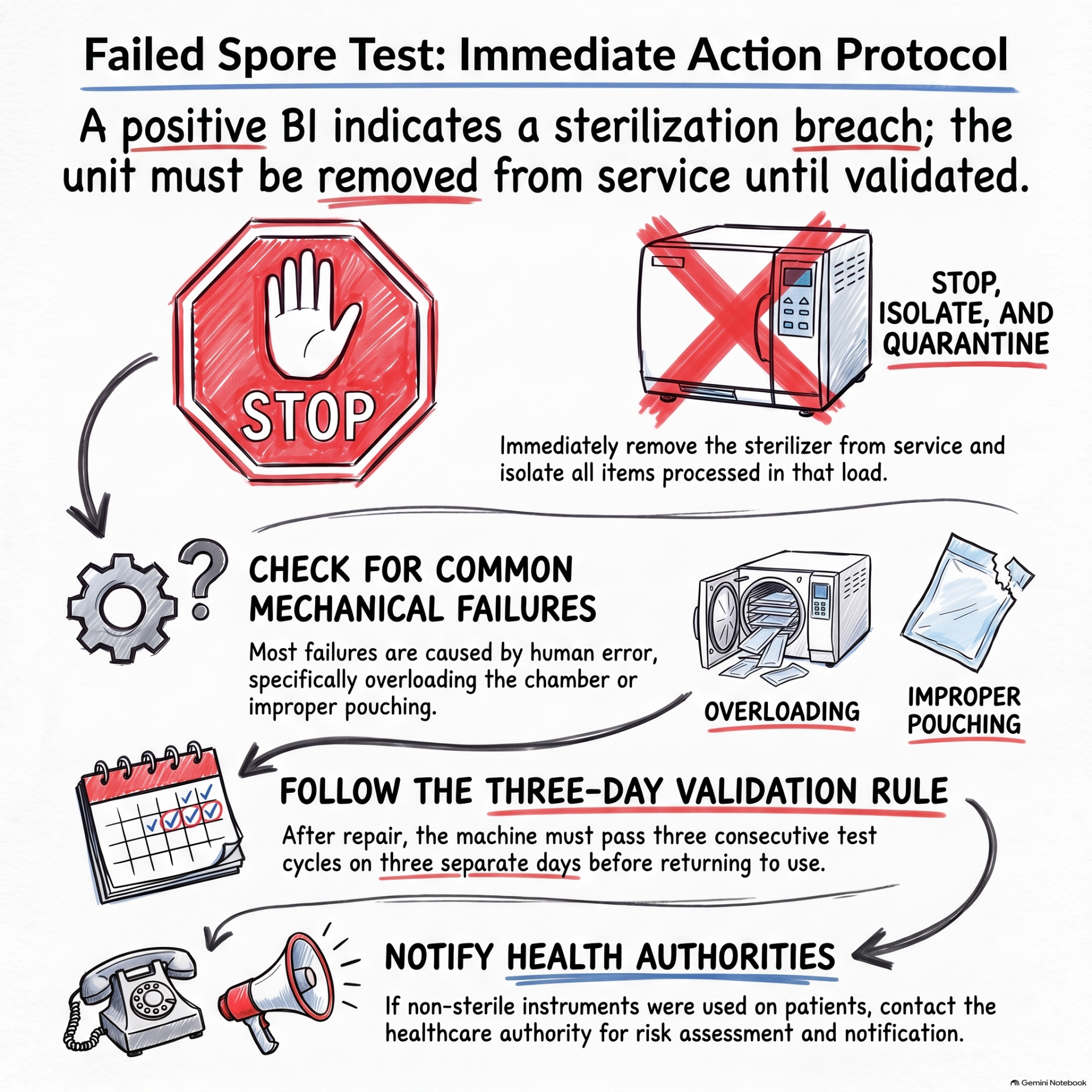
Sterilization monitoring relies on three distinct types of indicators, each serving a specific role in quality assurance

1- Mechanical Indicators: 

Physical displays, gauges, or printouts showing cycle time, temperature, and pressure. Must be checked and recorded for every load.

2- Chemical Indicators (Internal/External): 

Chemical heat-sensitive tapes or Type 5 integrators. Type 5 integrators utilize a wax reservoir that melts and passes a threshold line only when exposed to the proper combination of temperature, time, and pressure. Required for every load to verify parameter exposure.

3- Biological Indicators (BI / Spore Tests): 

 The gold standard for sterilization verification. Uses highly resistant bacterial spores (Bacillus stearothermophilus) to directly test the sterilizer's ability to kill microorganisms. Must be conducted at least daily for each sterilizer and cycle type

Free Resources to Support Your Preparation 🎥📚🆓

We believe that every candidate should have access to high-quality learning materials, which is why we offer free resources to support your preparation for the AFK exam! 🌟🎯📖

Interactive Videos: Our expertly crafted videos explain key topics in an engaging, easy-to-understand format, helping you grasp essential concepts more effectively.

Question Bank with Detailed Answers: Practice with real exam-style questions and receive comprehensive explanations to strengthen your understanding and improve your problem-solving skills.

One-on-One Consultation: Need a study plan tailored to your unique needs? We offer personalized 1-on-1 sessions, where we assess your situation and learning preferences to recommend the best study strategies for your success. 🤝📈📅

These resources are designed to empower you with the knowledge and confidence needed to excel in the equivalency process. Take advantage of them and set yourself up for success! 🚀📚💡

3- Spaulding Instrument Classification
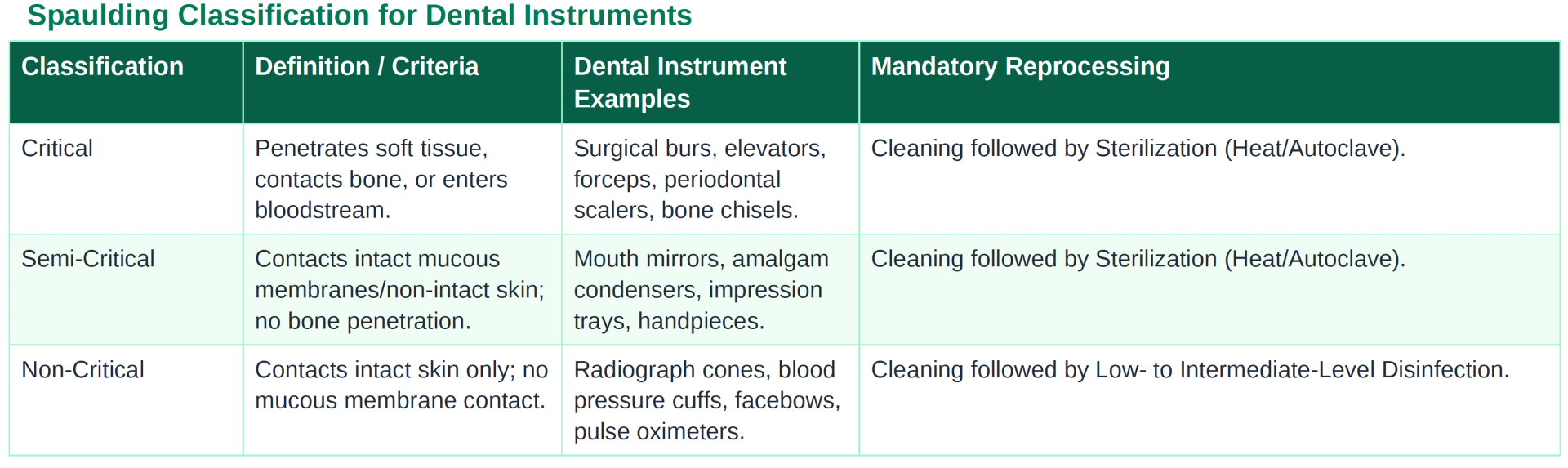
The Spaulding Instrument Classification system categorizes reusable dental instruments based on the degree of contact with patient tissue to determine the necessary level of reprocessing.

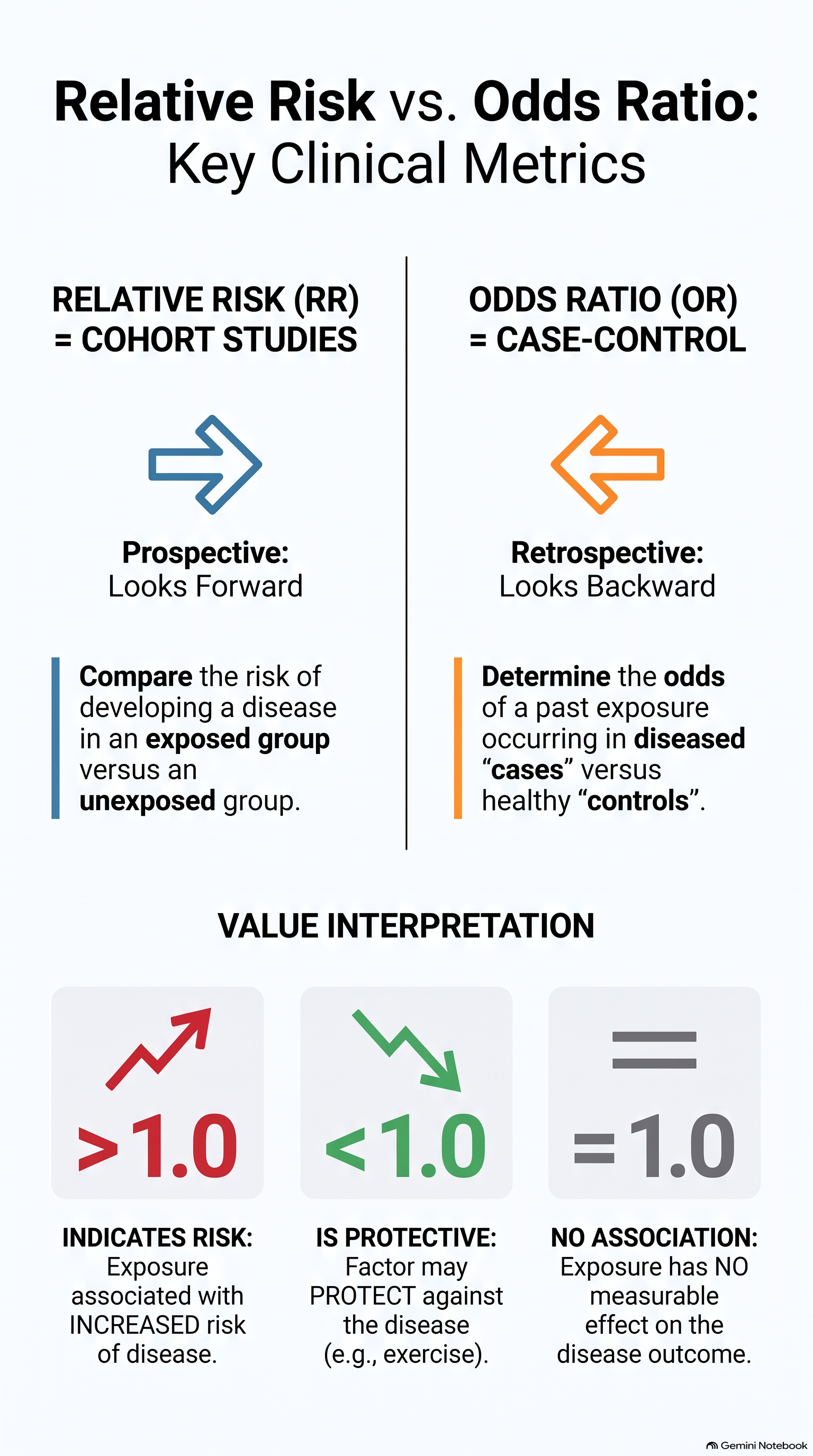
4. Study Design Mastery: Cohort vs. Case-Control Directionality
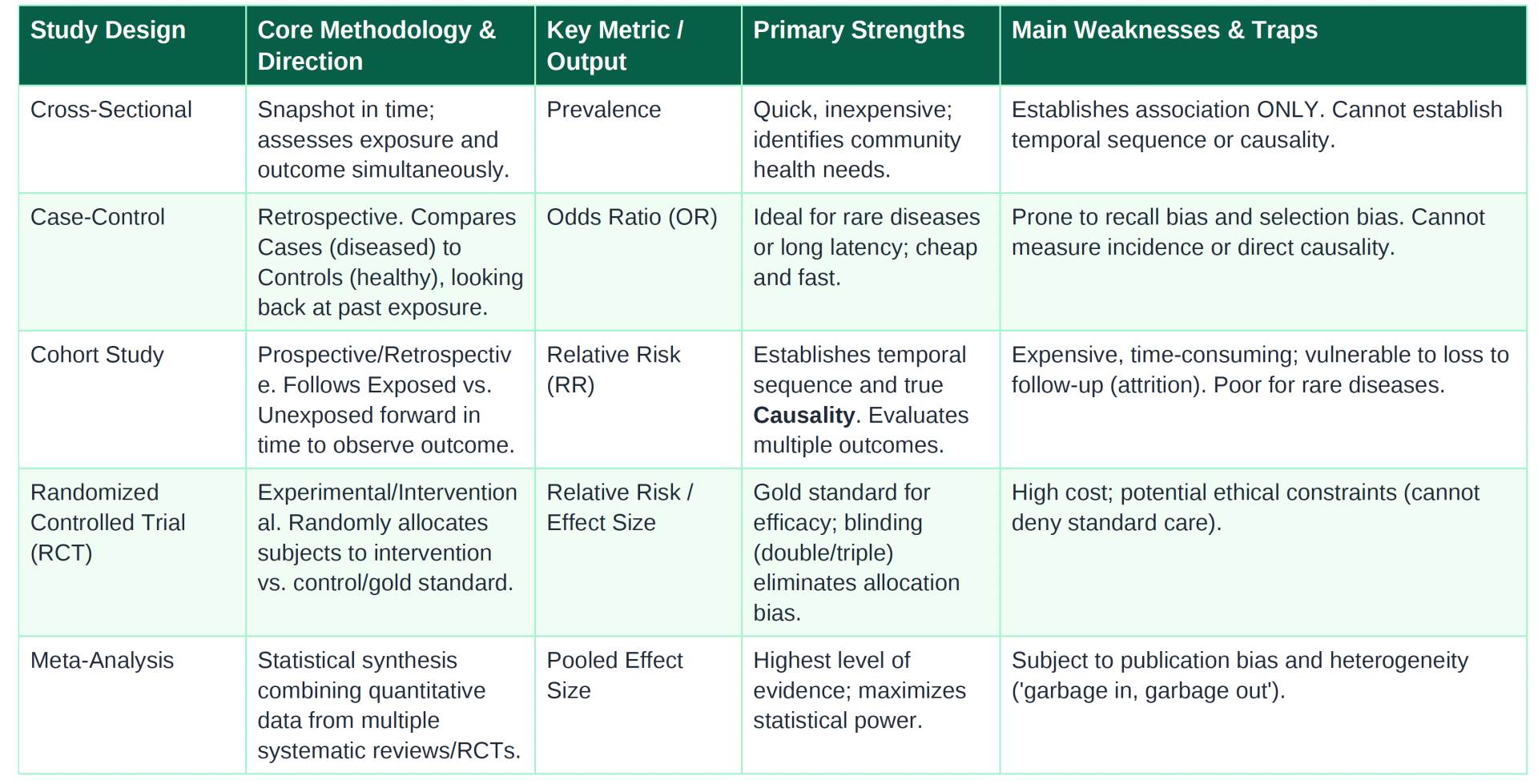
Distinguishing study designs on board exams requires ignoring distracting terms like "past" or "retrospective" and asking one fundamental question:
"WHERE DID THE RESEARCHERS START?"
COHORT STUDY DIRECTIONALITY:
[Start: EXPOSURE] ───► (Follow over time) ───► [Outcome: DISEASE / HEALTH]
    (Smokers vs. Non-Smokers) (Proves Causality | Relative Risk - RR) [61-64]

CASE-CONTROL STUDY DIRECTIONALITY:
[Start: OUTCOME] ───► (Look backward) ───► [Investigate: PAST EXPOSURE]
    (Cancer vs. No Cancer) (Odds Ratio - OR) [59, 60, 62, 65]

5. Epidemiology & Biostatistics Survival Guide
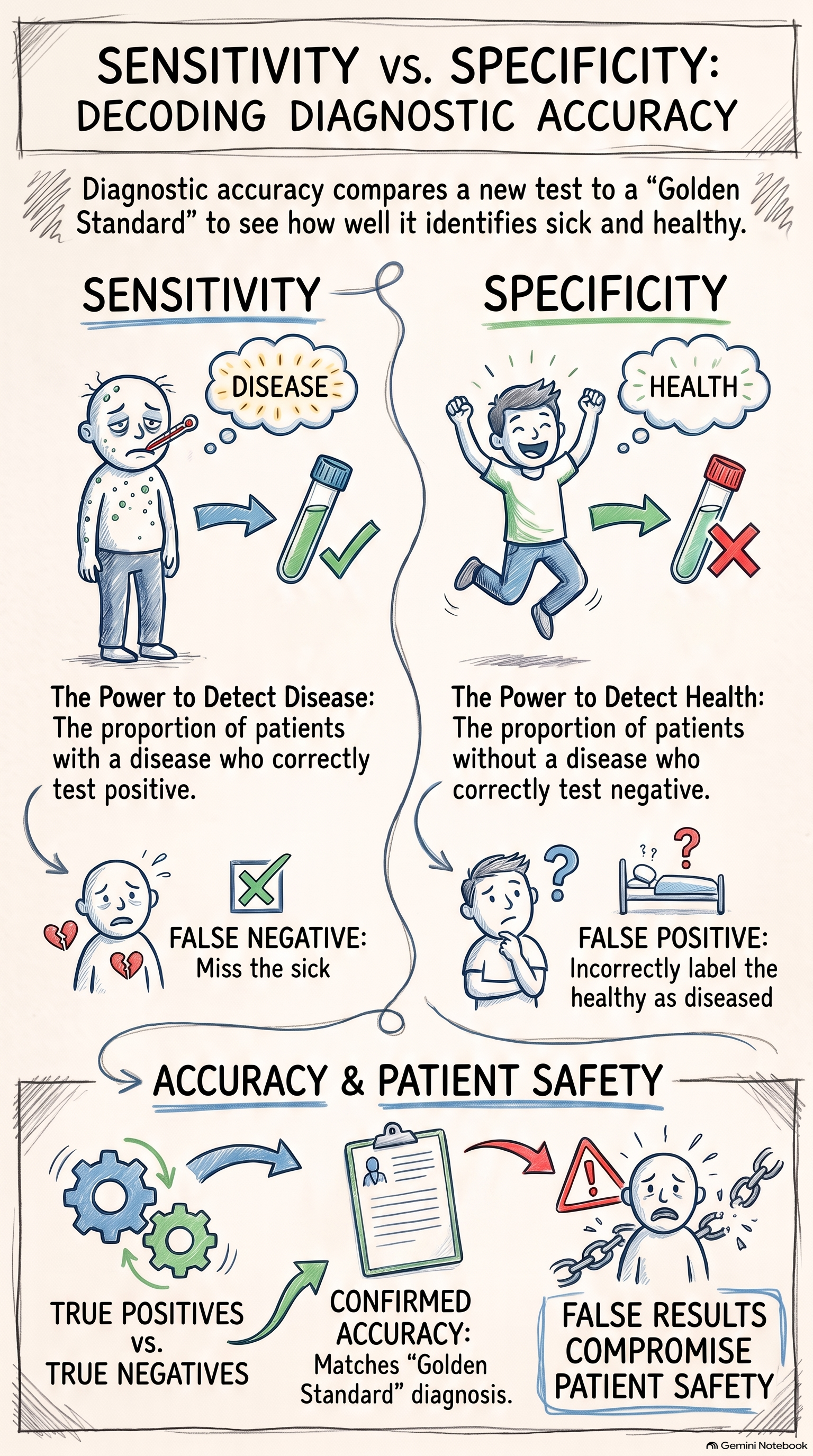
Distinguishing the following terms is very important and common AFK trap, let's understand each term:

Sensitivity :

The proportion of diseased patients who test positive. A test with high sensitivity rarely misses disease; a negative result rules OUT the condition.

Specificity :

The proportion of healthy patients who test negative
. A test with high specificity has very few false positives; a positive result rules IN the condition

Positive Predictive Value (PPV): 

The probability that a patient with a positive test actually has the disease.

Negative Predictive Value (NPV):

The probability that a patient with a negative test is truly free of disease.

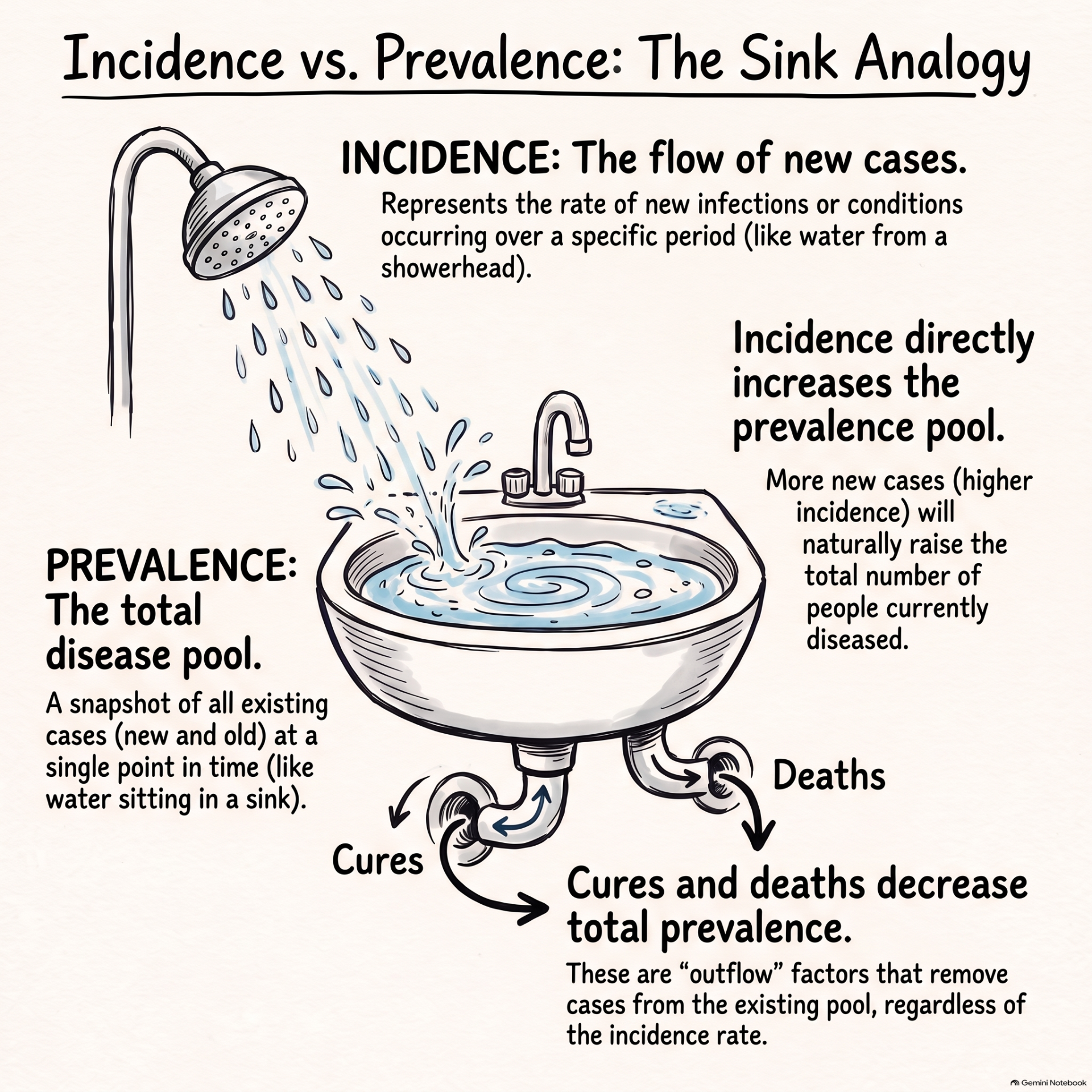
Incidence: 

The rate of NEW cases occurring in a population during a specified time window (analogous to water flowing from a tap into a bathtub).

Prevalence:

The total proportion of EXISTING cases (old + new) in a population at a single point in time (analogous to the water level in the tub).

Biostatistics: Hypothesis Testing & Decision Rules
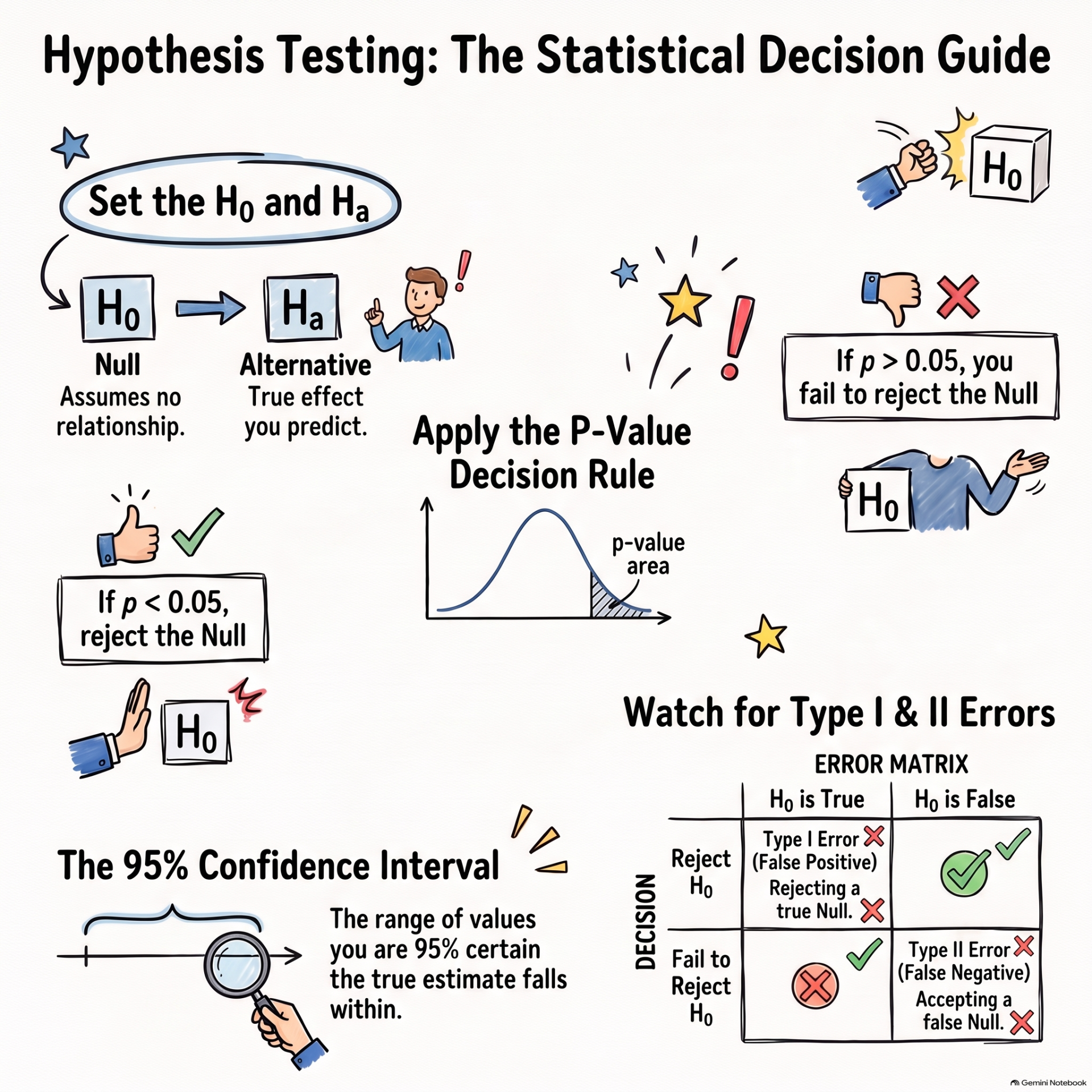
Null Hypothesis (Ho):
Assumes no true effect, no difference, or no association between variables. Testing always assumes H0 is true until evidence proves otherwise.
Alternative Hypothesis (H1):
States the researcher's prediction of a true effect or relationship.

P-Value Rule:

The probability of obtaining the observed results purely by chance if H0 were true.
If p < 0.05, the result is statistically significant
 ---- Reject H0 and accept Ha.
If p > 0.05, there is insufficient evidence Fail to reject H0

Errors in Hypothesis Testing:
Type I Error:
Rejecting a true null hypothesis (False Positive).
Type II Error:
Accepting/retaining a false null hypothesis (False Negative)
Confidence Interval (CI):
The range within which the true population parameter is estimated to fall 95% of the time. Wider intervals indicate greater data variation or smaller sample sizes.

About the Author:

Dr. Mohamed is a licensed dentist in Canada who successfully passed both AFK and ACJ exams. After seeing too many talented international dentists fail due to poor study strategies, he created AFKStudyPlan to provide structured, evidence-based preparation. He's helped 342+ dentists pass their NDEB equivalency exams.
Have questions?
Email us at Info@afkstudyplan.com
or call 587-707-7068.

Latest from our blog