Oct 11 • AFK study plan

The Complete Guide to Modern Operative Dentistry: From Caries Pathology to Tooth-Preserving Restorations

In modern clinical practice, dentistry has shifted from a traditional "drill and fill" model to a sophisticated, disease-management approach. Understanding the underlying dynamics of dental caries, recognizing non-carious tooth loss, mastering cavity preparation principles, and selecting appropriate direct or indirect restorative materials are essential for delivering long-lasting, patient-centered care

🎁 Your FREE AFK High-Yield Guide Is Ready!

Get instant access to a high-yield AFK PDF packed with important concepts, key facts, and exam-focused information you need to know.
📘 Study smart. Focus on what matters. Build your confidence.
Good luck with your AFK journey! 🦷💙
Enter your email to get your FREE PDF instantly.
Write your awesome label here.

1. Dental Caries Etiology: Demineralization vs. Remineralization
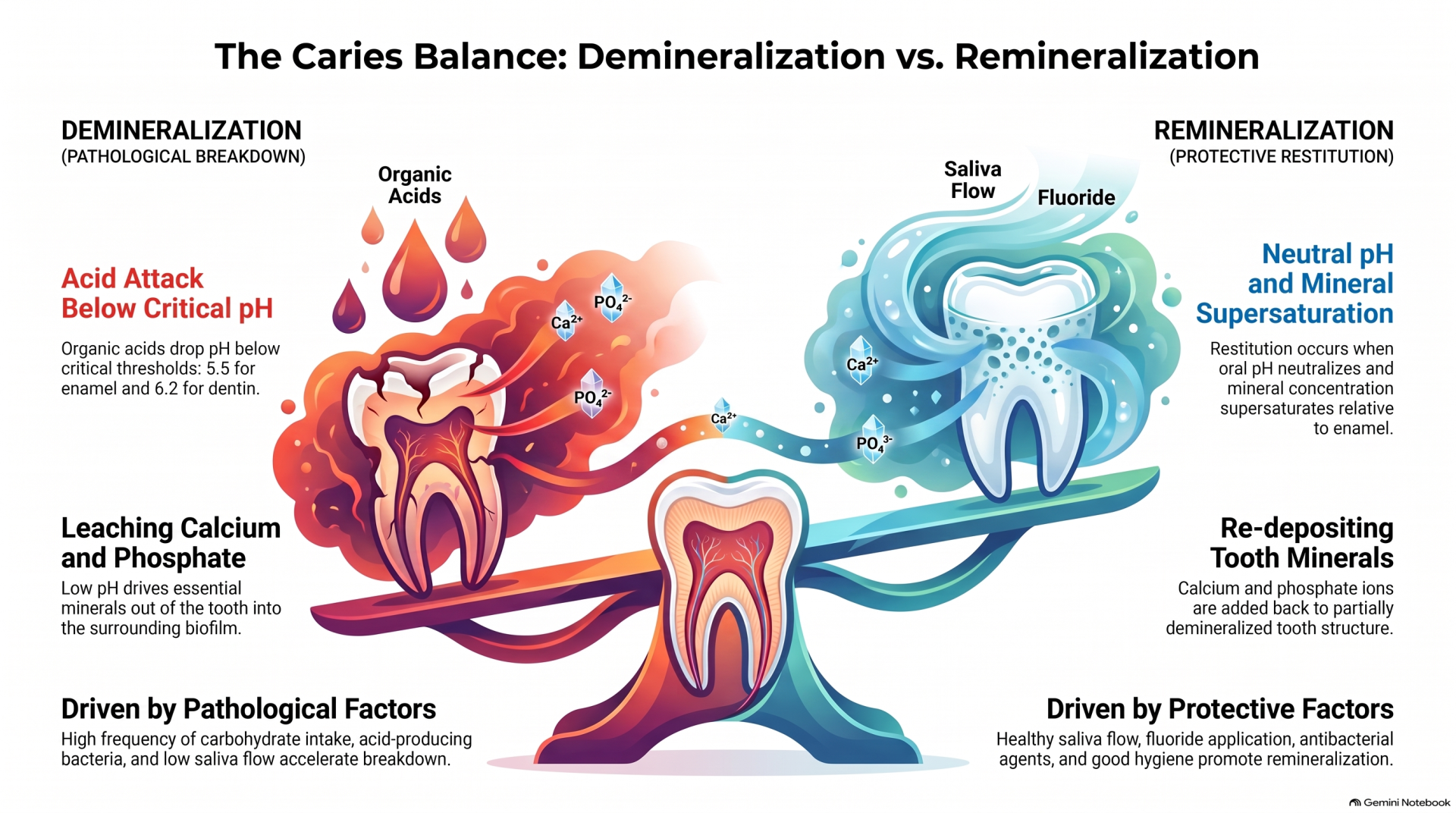
Dental caries is a multifactorial, transmissible infectious disease caused by the interaction of cariogenic oral biofilm with fermentable dietary carbohydrates on the tooth surface over time.
The Critical pH Thresholds
When bacteria in the biofilm metabolize carbohydrates, they produce organic acids that lower the local pH:
Enamel Critical pH: 5.5 — Below this level, hydroxyapatite dissolves, releasing calcium and phosphate into the biofilm.
Dentin/Cementum Critical pH: 6.2 — Dentin and exposed root surfaces demineralize at a significantly higher pH, making root caries progress rapidly.

Salivary Protective Mechanisms
Saliva acts as a natural defense system through four primary mechanisms:
- Mechanical Clearance: Flushing debris and carbohydrates.
- Antibacterial Activity: Enforced by enzymes like lysozyme and lactoferrin.
- Buffering Capacity: Neutralizing organic acids via bicarbonate ions.
- Remineralization Support: Driven by statherin, a proline-rich peptide that stabilizes calcium and phosphate ions to repair partially demineralized enamel

2. Histology of Carious Progression & Dentin Zones
The pattern of carious spread varies based on anatomical location:
Pit and Fissure Caries: Follows an inverted "V" shape in enamel, with a narrow entry at the surface and a broad base spreading along the Dentino-Enamel Junction (DEJ).
Smooth Surface Caries: Expands as a "V" shape with a wide base at the outer enamel surface and its apex pointing toward the DEJ.

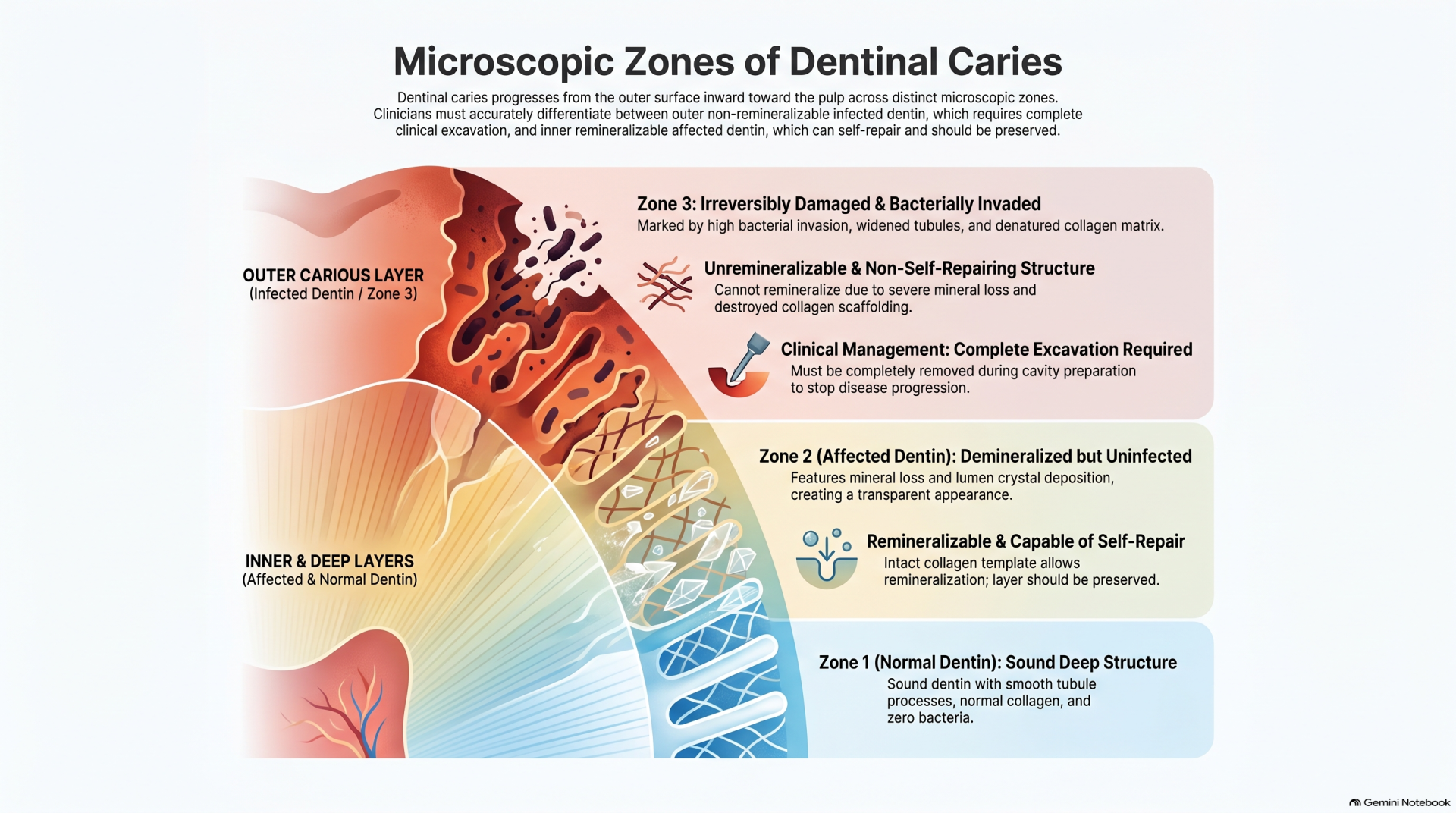
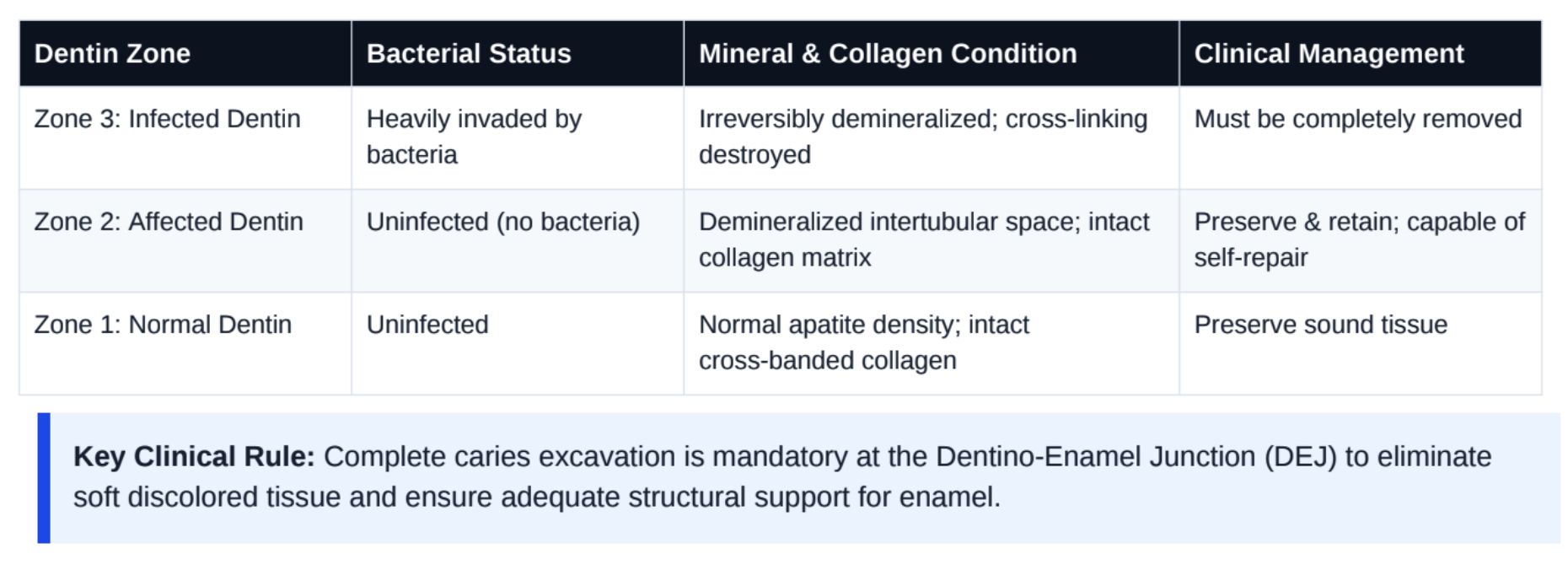
Microscopic Zones of Dentinal Caries:

When decay reaches dentin, three distinct histological zones form:

Free Resources to Support Your Preparation 🎥📚🆓

We believe that every candidate should have access to high-quality learning materials, which is why we offer free resources to support your preparation for the AFK exam! 🌟🎯📖

Interactive Videos: Our expertly crafted videos explain key topics in an engaging, easy-to-understand format, helping you grasp essential concepts more effectively.

Question Bank with Detailed Answers: Practice with real exam-style questions and receive comprehensive explanations to strengthen your understanding and improve your problem-solving skills.

One-on-One Consultation: Need a study plan tailored to your unique needs? We offer personalized 1-on-1 sessions, where we assess your situation and learning preferences to recommend the best study strategies for your success. 🤝📈📅

These resources are designed to empower you with the knowledge and confidence needed to excel in the equivalency process. Take advantage of them and set yourself up for success! 🚀📚💡

3. Non-Carious Tooth Surface Loss (NCTSL)
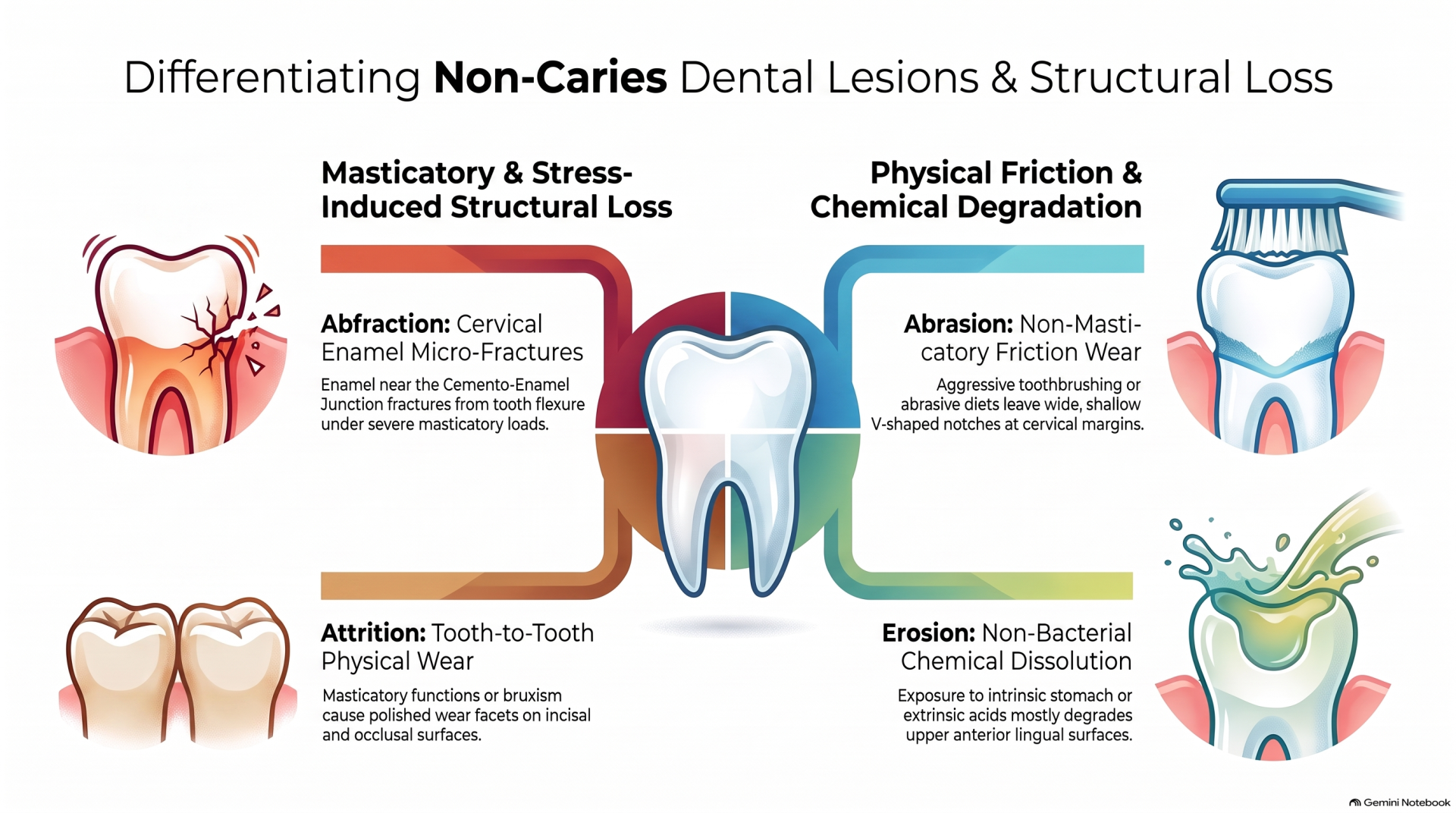
  Not all tooth defects stem from bacterial acid production. Clinicians must differentiate caries from physical and chemical wear mechanisms:
- Attrition: Mechanical wearing of tooth structure from tooth-to-tooth friction during mastication or bruxism, resulting in polished flat wear facets.
- Abrasion: Mechanical wear caused by non-masticatory friction (e.g., aggressive horizontal toothbrushing with abrasive paste), creating shallow, wide V-shaped cervical notches.
- Abfraction: Cervical loss of tooth structure caused by heavy occlusal flexure forces, which micro-fracture enamel near the Cement-Enamel Junction (CEJ), presenting as deep, narrow wedge-shaped defects.
- Erosion: Loss of tooth structure via non-bacterial chemical dissolution from intrinsic acids (e.g., severe GERD, bulimia) or extrinsic acids (e.g., frequent citrus or soda consumption), commonly affecting the lingual surfaces of upper anterior teeth.

4.  Direct Restorative Materials: Composite vs. Amalgam
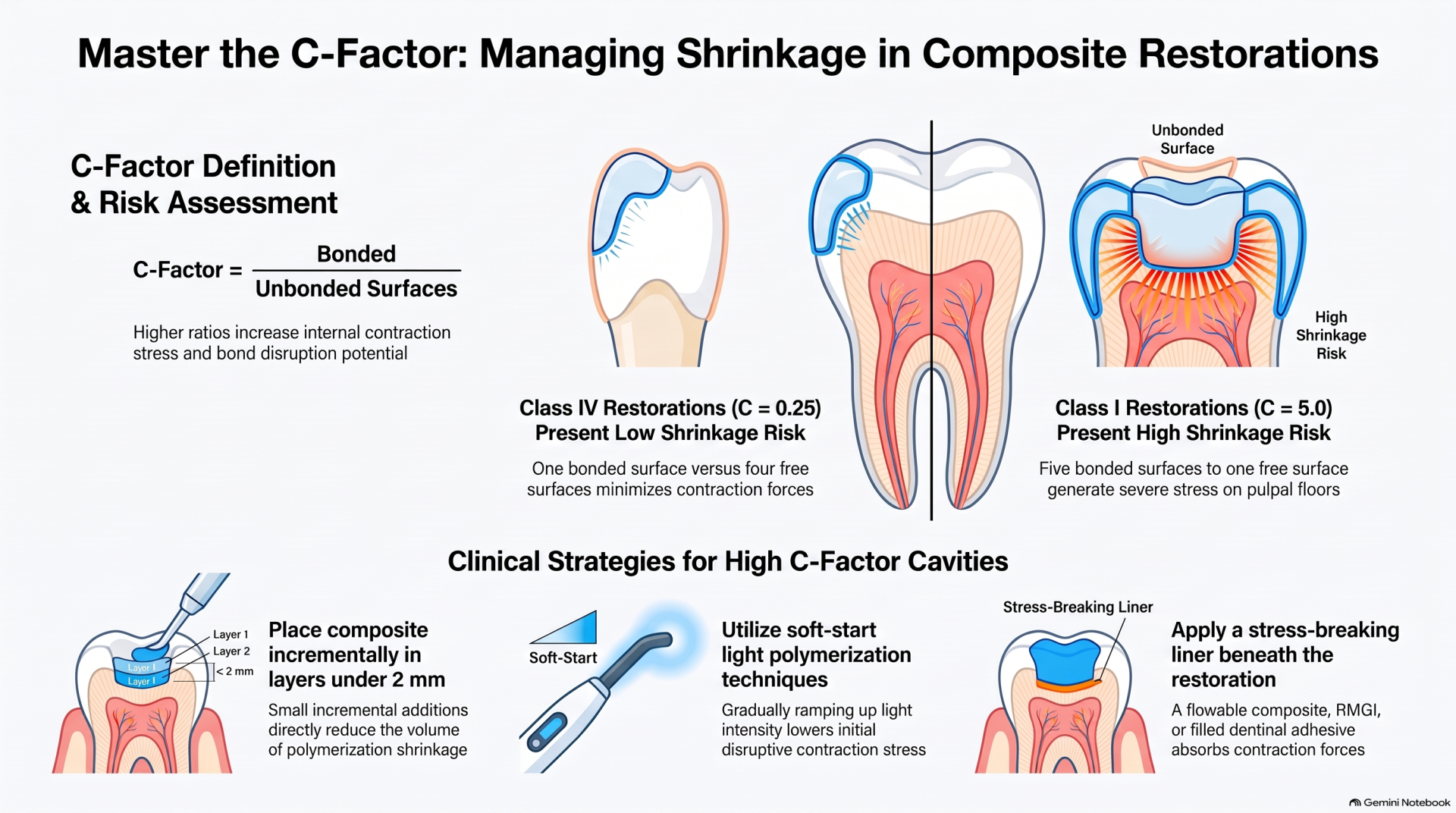
Selecting between direct dental composite and silver amalgam requires weighing material physics, stress management, and clinical indications.
C-Factor Formula:

C-Factor = Bonded Surfaces / Unbonded (Free) Surfaces
• Class I Cavity (High Stress): 5 bonded / 1 unbonded = C-Factor of 5.0.
• Class IV Cavity (Low Stress): 1 bonded / 4 unbonded = C-Factor of 0.25.
 Shrinkage Stress Mitigation Strategies
1- Incremental Placement:
Applying composite in less than 2 mm oblique increments
2- Start Curing:
Initial low-intensity polymerization allowing viscous flow prior to high-intensity curing.
3- Stress-Breaking Liners:
Placing a thin layer of flowable composite or Resin-Modified Glass Ionomer (RMGI) to absorb contraction stress.

Dental Amalgam Specifications

Dental amalgam remains a durable, technique-forgiving material under heavy occlusal
1- Cavosurface Margin:
Requires a crisp 90° cavosurface angle to prevent edge fractures in both amalgam and brittle enamel.
2- Marginal Sealing Dynamics:
While composite initial marginal leakage increases over time due to thermal expansion (LCTE ~3x tooth structure), amalgam marginal leakage decreases over time as corrosion products seal the tooth-restoration interface.

About the Author:

Dr. Mohamed is a licensed dentist in Canada who successfully passed both AFK and ACJ exams. After seeing too many talented international dentists fail due to poor study strategies, he created AFKStudyPlan to provide structured, evidence-based preparation. He's helped 342+ dentists pass their NDEB equivalency exams.
Have questions?
Email us at Info@afkstudyplan.com
or call 587-707-7068.

Latest from our blog