Oct 18 • AFK study plan

Comprehensive Pediatric Dentistry Guide: Primary Tooth Preparation, Space Management, Behavior Guidance, and Pulp Therapy

Restoring primary teeth and managing pediatric dental patients requires a distinct approach compared to adult dentistry. Primary teeth are not simply smaller versions of adult teeth—they possess unique anatomical features, such as thinner enamel and dentin layers, broader proximal contacts, and large, shallow pulp chambers with prominent pulpal horns. Mastering pediatric dentistry involves balancing precise clinical execution—from conservative cavity preparations to space management—with non-pharmacological and pharmacological child behavior guidance. This comprehensive guide breaks down the core pillars of pediatric oral health care for clinicians and dental practices.

🎁 Your FREE AFK High-Yield Guide Is Ready!

Get instant access to a high-yield AFK PDF packed with important concepts, key facts, and exam-focused information you need to know.
📘 Study smart. Focus on what matters. Build your confidence.
Good luck with your AFK journey! 🦷💙
Enter your email to get your FREE PDF instantly.
Write your awesome label here.

1. Restorative Dentistry for Primary Teeth & Stainless Steel Crowns (SSCs)
Because primary teeth have thin outer enamel and dentin walls, cavity preparations must remain strictly conservative to protect the pulp and prevent tooth weakening.
When restoring primary molars, material choice is critical: fluoride-releasing materials such as glass ionomer cement (GIC) or resin-modified glass ionomer (RMGI) are preferred over amalgam due to superior chemical bonding and preventive properties.
Stainless Steel Crown (SSC) Protocol:
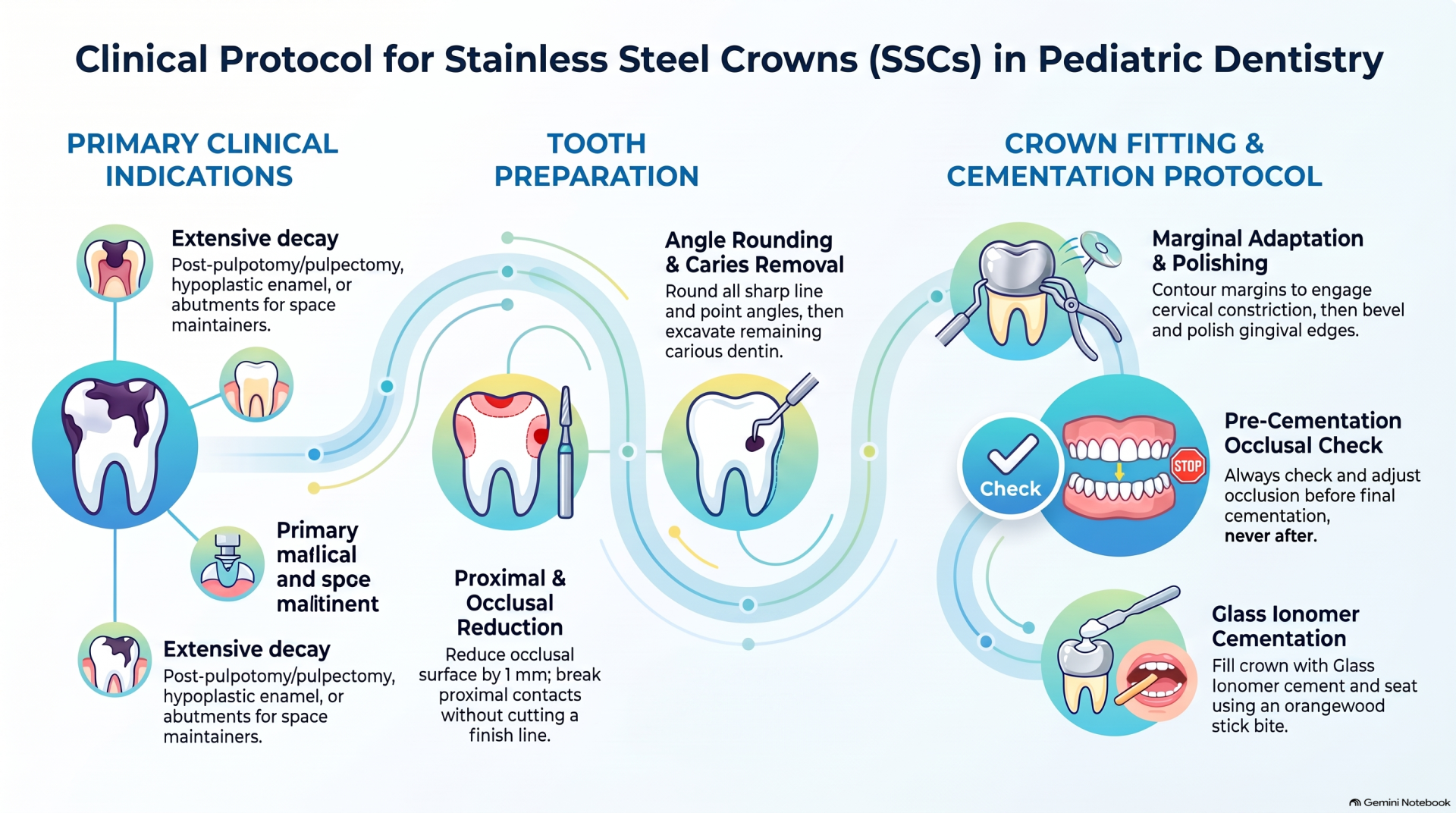
When primary molars present with extensive multi-surface decay, developmental defects, or post-pulpotomy status, Stainless Steel Crowns (SSCs) represent the gold standard restoration.
1- No Finish Line Required:
Unlike custom permanent crowns, SSC preparations do not require a shoulder or chamfer finish line. Instead, the crown relies on mechanical retention and the pronounced cervical constriction of the primary crown.
2-Preparation Steps:
Proximal contact is broken mesially and distally using a #69L tapered fissure bur13. Occlusal reduction is kept to approximately 1.0mm following natural cuspal contours, and sharp line angles are rounded.
3- Esthetic Variations:
For anterior teeth requiring full coverage, clinicians can utilize open-face stainless steel crowns (where the labial metal face is windowed and filled with composite resin), direct resin strip crowns, or pre-fabricated zirconia crowns.

2. Pediatric Space Management & Space Maintainers
Premature loss of primary molars—most commonly caused by extensive carious breakdown or infection—can severely disrupt dental arch development. Up to 80% of arch space reduction occurs within the first 6 months following extraction, with space closure occurring faster in the maxillary arch than in the mandible.
Key Clinical Rule: Always obtain a periapical radiograph before placing any space maintainer to confirm the presence and developmental stage of the underlying permanent successor
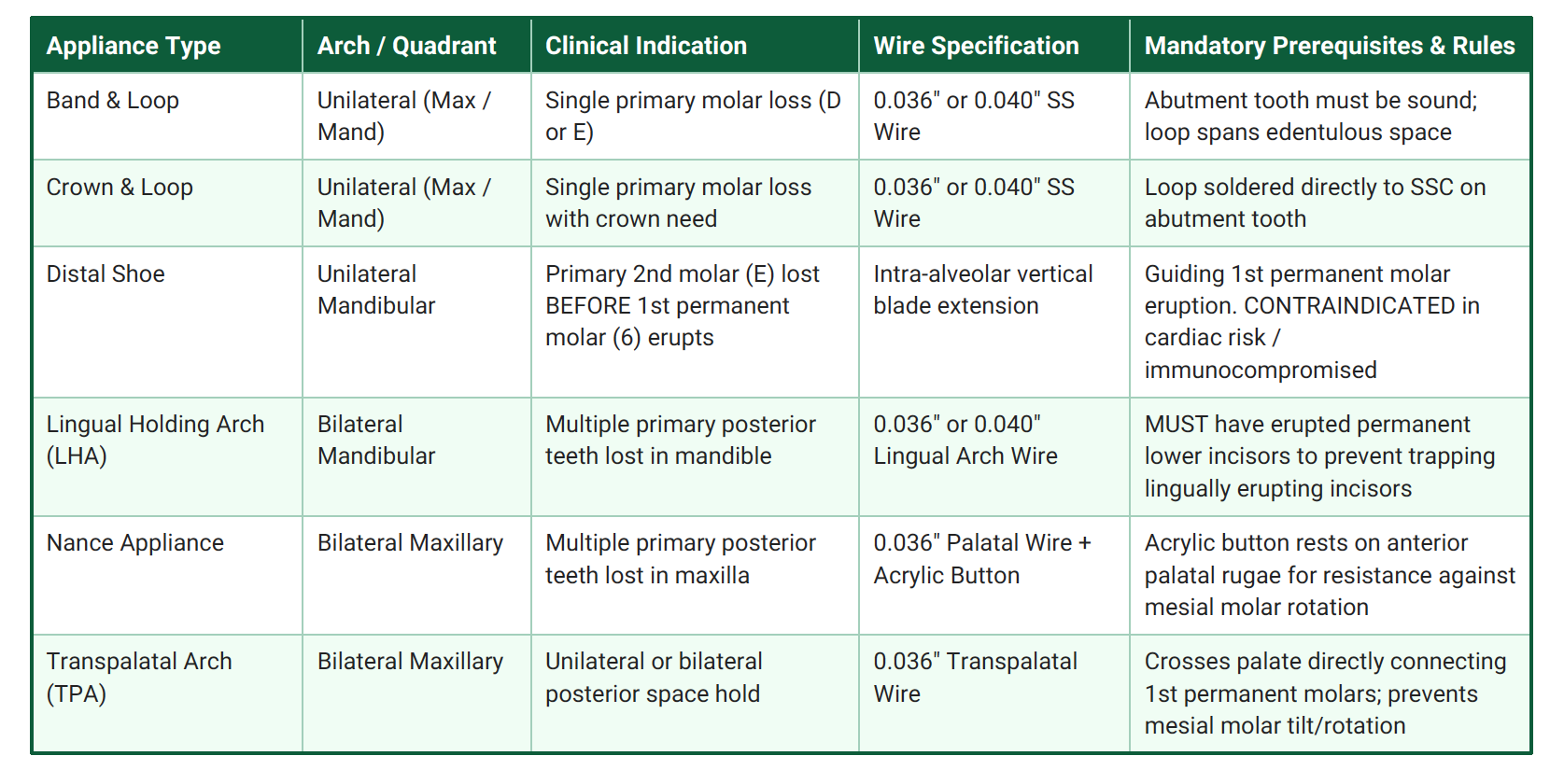
1- Band & Loop Maintainer: 
Indicated for a single primary molar loss, constructed using 0.036'' or 0.040'' stainless steel wire soldered to an adjacent banded tooth.
2- Distal Shoe Maintainer:
Essential when a primary second molar is lost before the eruption of the first permanent molar; an intra-alveolar blade guides the un-erupted molar into proper position.
3- Lingual Holding Arch (LHA): 
Used for bilateral space loss in the mandibular arch; requires the permanent lower anterior incisors to be fully erupted before placement to avoid impinging on erupting tooth bud.

Free Resources to Support Your Preparation 🎥📚🆓

We believe that every candidate should have access to high-quality learning materials, which is why we offer free resources to support your preparation for the AFK exam! 🌟🎯📖

Interactive Videos: Our expertly crafted videos explain key topics in an engaging, easy-to-understand format, helping you grasp essential concepts more effectively.

Question Bank with Detailed Answers: Practice with real exam-style questions and receive comprehensive explanations to strengthen your understanding and improve your problem-solving skills.

One-on-One Consultation: Need a study plan tailored to your unique needs? We offer personalized 1-on-1 sessions, where we assess your situation and learning preferences to recommend the best study strategies for your success. 🤝📈📅

These resources are designed to empower you with the knowledge and confidence needed to excel in the equivalency process. Take advantage of them and set yourself up for success! 🚀📚💡

3. Child Behavior Guidance & Nitrous Oxide (N2O-O2) Sedation
Effective pediatric management begins with understanding child psychology and recognizing that maternal and parental anxiety heavily influences a child's behavior in the dental chair.
Non-Pharmacological Behavior Shaping
Clinicians evaluate child behavior using standardized frameworks such as Wright’s Classification (Cooperative, Lacking Cooperative Ability, Potentially Cooperative) and the Frankl Behavioral Rating Scale (ranging from Rating 1: Definitely Negative to Rating 4: Definitely Positive).
 Recommended communicative techniques include:
1- Tell-Show-Do: Explaining procedures in age-appropriate terms, demonstrating on a model, and executing the action.
2-Positive Reinforcement & Modeling: Rewarding cooperative behavior with tangible praise or small rewards.
3- Voice Control: Modulating volume and tone to gain attention and establish authority gently
Inhalation Sedation with Nitrous Oxide (N2O):
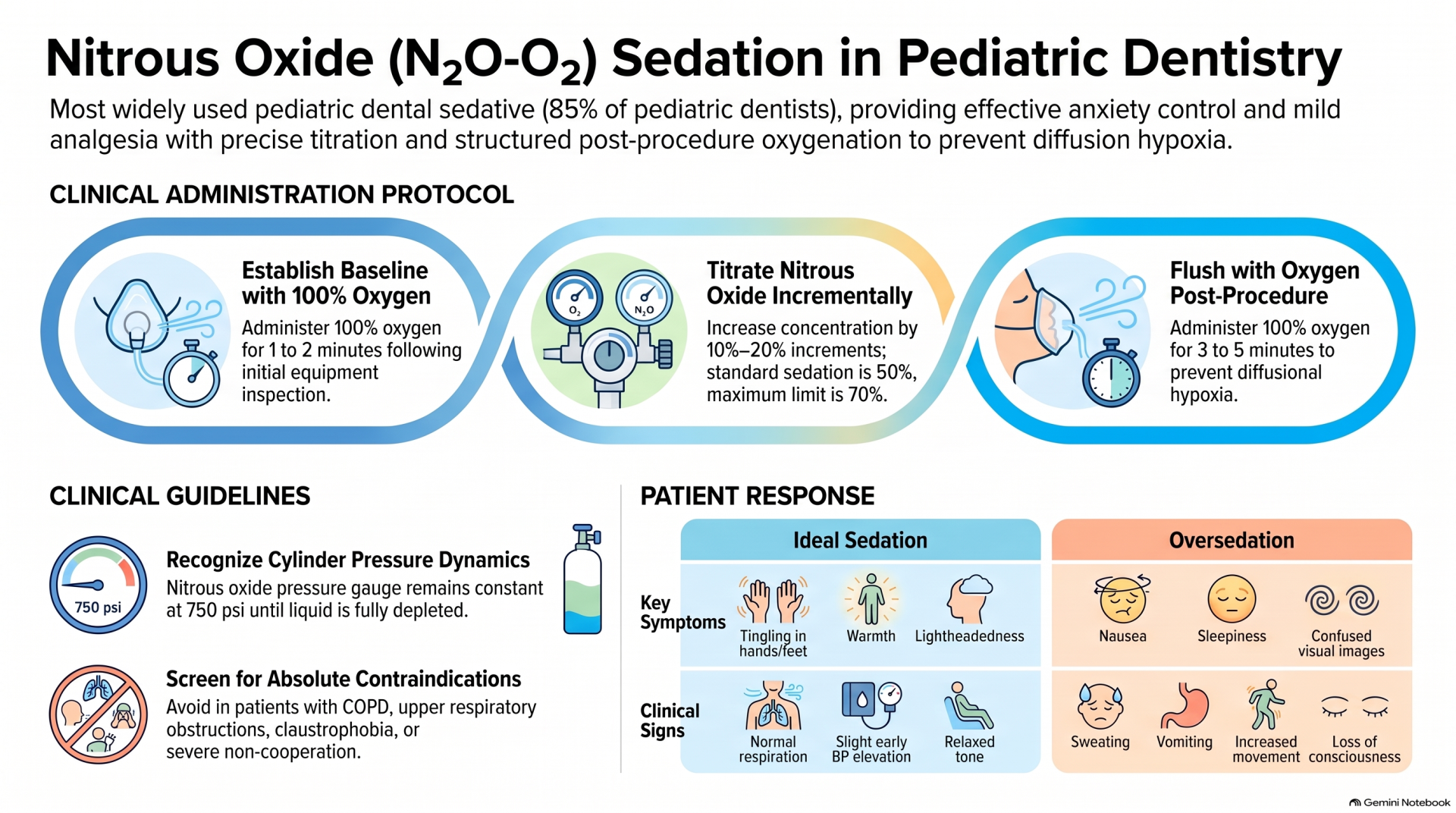
Utilized by over 85% of pediatric dentists, nitrous oxide is a sweet-smelling, non-irritating, inert gas compressed as a liquid that vaporizes upon release (an endothermic reaction that chills the supply tank).
Administration Protocol: Begin with 100% O2 for 1–2 minutes, then titrate (N2O) in 10%–20% increments up to a standard 50% NO and 50% O2.
Safety Ceilings: The concentration of (N2O) must never exceed 70% to prevent hypoxia.
Absolute Contraindication: (N2O) is strictly contraindicated in patients with Chronic Obstructive Pulmonary Disease (COPD) because it disrupts their hypoxic respiratory drive.

4. Vital & Non-Vital Pediatric Pulp Therapy
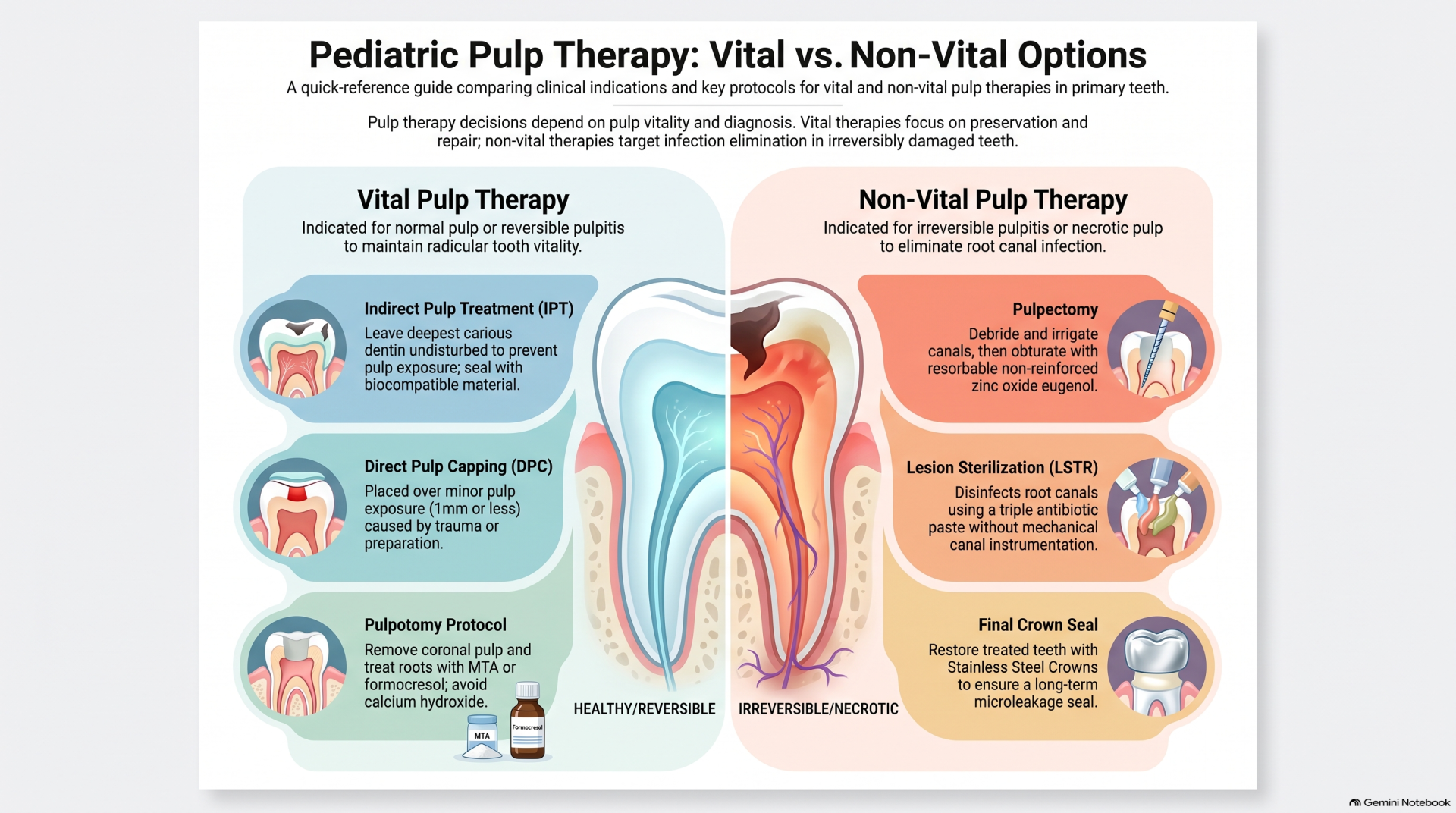
Accurate diagnosis distinguishing reversible pulpitis (pulp is inflamed but capable of healing) from irreversible pulpitis or necrosis dictates whether a tooth requires vital or non-vital therapy.

Vital Pulp Modalities (Reversible Pulpitis / Normal Pulp)Indirect Pulp Treatment (IPT): 
Indicated for deep carious lesions without radicular symptoms; the deepest affected dentin is left intact near the pulp to avoid mechanical exposure.
Direct Pulp Capping: Restricted to small, pinpoint mechanical or traumatic exposures (less than 1 mm) in symptom-free primary teeth.
Pulpotomy: Complete removal of the coronal pulp tissue followed by application of Mineral Trioxide Aggregate (MTA) or Formocresol over the radicular pulp stumps.
Critical Warning: Calcium Hydroxide Ca(OH) is strictly contraindicated for pulpotomies in primary teeth because it induces severe internal root resorption.

Non-Vital Pulp Modalities (Irreversible Pulpitis / Necrosis)Pulpectomy: Full root canal debridement and shaping, followed by obturation with a resorbable, non-reinforced Zinc Oxide-Eugenol (ZOE) paste that resorbs synchronously with primary root shedding.
Sterilization & Tissue Repair (LSTR): An uninstrumented technique utilizing a 3Mix antibiotic paste (Ciprofloxacin, Metronidazole, Minocycline) placed directly over the pulpal floor.

About the Author:

Dr. Mohamed is a licensed dentist in Canada who successfully passed both AFK and ACJ exams. After seeing too many talented international dentists fail due to poor study strategies, he created AFKStudyPlan to provide structured, evidence-based preparation. He's helped 342+ dentists pass their NDEB equivalency exams.
Have questions?
Email us at Info@afkstudyplan.com
or call 587-707-7068.

Latest from our blog